Blood Sugar
High Blood Sugar in the Morning When You Haven't Eaten? What Your Body Does Between 4 and 8 a.m.
By the Blood Sugar Balance editorial desk · October 2026 · 7 min read
If you wake up to high blood sugar in the morning after eating nothing for ten or twelve hours, it feels like the meter is lying to you. You skipped the bedtime snack. You went to bed early. And the first number of the day is still higher than the one you saw after dinner.
The person I watched go through this is my brother-in-law, Ray. He is 63, a retired electrician, and the most stubborn man at any family dinner. For most of last winter he started every day the same way: meter on the kitchen table, coffee not yet poured, a number in the 130s, and a look on his face like he had been cheated at cards. "I didn't eat a thing," he would say. "How is it higher now than at nine last night?"
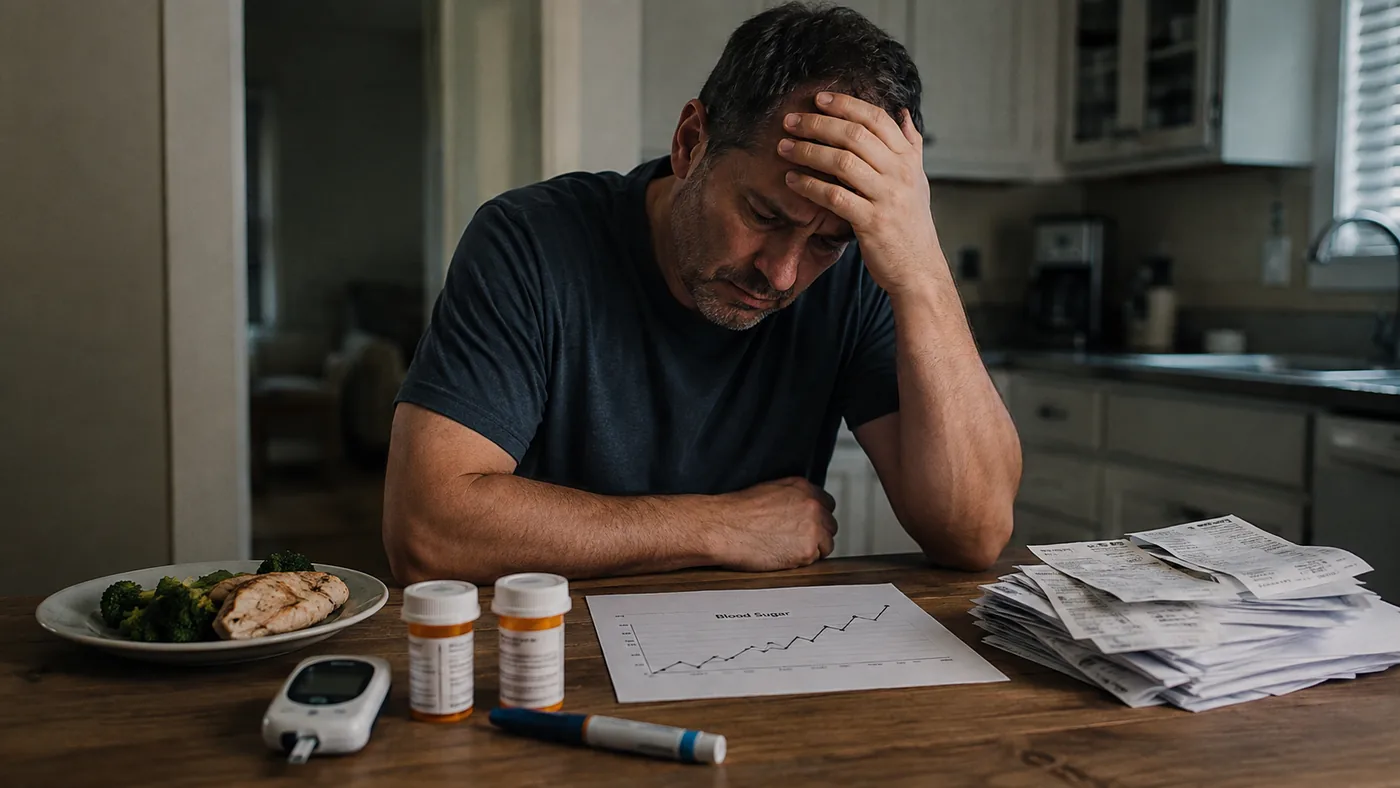
He was not imagining it, and neither are you. A morning number that climbs overnight is one of the most common things people with prediabetes and type 2 diabetes ask about, and the reason is not your dinner. It is something your body does on its own, every night, whether you ate or not.
What happens between 4 and 8 a.m.
Doctors call it the dawn phenomenon. A physician-reviewed explainer updated this July puts the window at roughly 4 to 8 a.m.: in those hours your body releases a wave of hormones meant to get you up and moving. The main ones are cortisol, growth hormone, glucagon and epinephrine.
Those hormones do two things at once. They tell your liver to release stored sugar into the blood, so you have fuel when you wake. And they make your cells, for a few hours, less willing to respond to insulin. In a body that handles sugar easily, extra insulin covers the rise and nobody notices. In a body that is already a little insulin resistant, the rise wins, and the first reading of the day shows it.
The short version: a high fasting number usually is not about what you ate last night. It is about how your body answers its own morning wake-up call: a liver releasing sugar, stress hormones at their daily peak, and insulin working at its weakest hour.
What everyone tells you to do, and what it leaves out
The standard advice, and it is reasonable advice, goes like this:
- Eat a lighter, earlier dinner, with fewer refined carbohydrates.
- Walk for a few minutes after dinner.
- Sleep seven to nine hours and keep the bedroom dark and cool.
- Bring the readings to your doctor, who may change the timing of a medication.
Ray did every one of those. He moved dinner to 5:30. He walked the dog after it. He stopped the bowl of cereal at 10 p.m. that he had eaten for thirty years. His evening numbers improved. His morning numbers barely moved.
That is the part almost nobody explains. Everything on that list works on the evening: the food, the walk, the dinner hour. None of it touches the morning half of the problem, the hour when cortisol is at its daily high and your body is at its least responsive to insulin. You can do the evening perfectly and still lose the morning, because the morning is decided by hormones you did not eat.
And there is a second piece hiding in that list. Stress and short sleep raise cortisol, and cortisol is one of the dawn hormones. Ray, like most men his age, slept badly and worried more than he admitted. His mornings were starting with the volume turned up before his feet hit the floor.
The question that changed how he looked at it
What finally shifted things was a simple question from his daughter, who is a nurse: "You keep fixing dinner. What are you doing for your body at 6 a.m.?"
The honest answer was nothing. Coffee, the meter, and frustration. He had been treating the morning number as the score of the night before, when it was really the result of what his body was doing right then, in the first hour awake.
So the question became: is there anything that supports the body in the morning, on the insulin side and the stress-hormone side at the same time, without another prescription?
When a high morning number is a reason to call your doctor
Before Ray's answer, the part that matters most. If your fasting readings are consistently above 130, if they keep climbing week to week, or if they come with constant thirst, frequent urination, blurry vision, or a reading that is low in the middle of the night, see your doctor. A low at 3 a.m. followed by a high at 7 can be a different problem with a different fix. Bring two weeks of readings and the times you took them.
What he takes now, and why he took the chance
Ray did not go shopping for a supplement. He is the man who reads every warranty and returns half of what he buys. The name came from a neighbor two doors down, Carol, who has had type 2 diabetes for eleven years and had been complaining about her own mornings at the mailbox for as long as he had known her. One day in the spring she stopped complaining.
He asked her what changed. She went inside and came back with a small amber dropper bottle.
His first reaction, in his words: "Drops. Sure. And I've got a bridge to sell you." He had already tried two things. A cinnamon capsule from the pharmacy aisle, which did nothing he could measure in two months. And a spoonful of apple cider vinegar at bedtime, which gave him heartburn and the same 7 a.m. number.
So he did what he always does. He took a picture of the label and read it at his own kitchen table, with his reading glasses and a lot of skepticism. Three things changed his mind. It was taken in the morning, before breakfast, which was exactly the hour he had nothing for. The ingredients worked on both of his problems, insulin and stress, instead of only one. And the company's order page showed a 60-day money-back guarantee, which, for a man who returns things, was the deciding line.
The bottle was Glyco Harmony.

What is in it, in plain words
The company lists a blend built around chromium and botanical extracts. These are the five Ray looked up, and how each one connects to the 4-to-8 a.m. window:
- Chromium picolinate. A mineral the company describes as a "key" that helps insulin get glucose into your cells. This is the insulin side: the hour when insulin is working at its weakest.
- Gymnema leaf. A traditional herb long used for healthy glucose metabolism, and the one most associated with quieting sugar cravings later in the day.
- Green tea leaf. Catechins that the company says help your cells respond to insulin and slow how fast sugar reaches the blood.
- Maca root. An adaptogen the company includes specifically for the body's response to stress, the factor it says "triggers cortisol and throws blood sugar out of balance." This was the line Ray underlined, because cortisol is one of the dawn hormones.
- Panax ginseng. Included, the company says, to help muscle cells take up glucose, and for the tired, foggy feeling that often comes with uneven blood sugar.
How he takes it
The label says to shake well and take 1 to 2 droppers full daily, placed in the mouth and swallowed. The company recommends the morning, before a meal. Ray takes his right after the first reading, before breakfast, so the support is in place during the hours his body is fighting him hardest. He told his doctor before starting, and he kept his metformin exactly as prescribed.
What changed, week by week
- Week 1. Nothing. The morning number looked like the same old number, and he made sure everyone at Sunday dinner knew it.
- Weeks 2 and 3. The first thing he noticed was not the meter. It was that he stopped waking up at 4 a.m. with his mind racing. A few mornings the number started with a 1 and then a 2 instead of a 3.
- Month 1. His fasting readings were calmer and less jumpy from day to day. "Not a miracle. Just not a fight every morning."
- Months 2 and 3. He stopped writing "WHY?" next to his morning numbers in the logbook, which, if you know Ray, is the real result. His doctor will look at the next A1C; as we wrote in our piece on what an A1C misses, the average and the morning measure different things.
Why weeks and not days? Because how your body handles its own morning sugar shifts slowly, and the company itself talks about improvements within the first few weeks, not the first few days. Its guarantee even asks that you use it at least 30 days before deciding. That is why Ray's second order was the larger supply: he wanted enough time to actually find out. Individual results vary.
Who it is for, and who should talk to a doctor first
It may be worth a look if your morning number is the stubborn one, you have already fixed dinner and the evening walk, your doctor has called you "prediabetic" or "borderline" or you manage type 2 with diet and oral medication, and you want something that works on the morning itself.
Talk to your doctor first, or skip it, if you have type 1 diabetes, you take insulin or a medication that can cause lows (chromium and gymnema work on the same thing), you are pregnant or nursing, you are under 18, or you are seeing lows in the night. A daily habit is not a substitute for an evaluation.
The guarantee
The company's order page shows a 60-day, 100% satisfaction guarantee: if you are not happy for any reason, you contact them and they refund the purchase. Ray gave himself the full window, and he says he would have used it if the mornings had not changed.
If your first number of the day is the hardest oneSee the morning drops Ray keeps next to his meter → Sixty days to see if your mornings changeStart your own 60-day try of Glyco Harmony →P.S. For most of last winter, Ray's mornings started with a number in the 130s and the words "I didn't eat a thing." These days the coffee comes a little sooner. If tomorrow's 6 a.m. reading is the one you are dreading, this is the bottle he started with.
Continue reading What an A1C Number Does Not Show You Why two people with the same A1C can be having completely different mornings.Sources and further reading
"The Dawn Phenomenon: Why Your Blood Sugar is High at 6 AM." Doctor's Note, Ubie Health. Published May 6, 2026; medically reviewed July 9, 2026.
Porcellati F, Lucidi P, Bolli GB, Fanelli CG. Thirty years of research on the dawn phenomenon: lessons to optimize blood glucose control in diabetes. Diabetes Care, 2013;36(12).
Monnier L, et al. Magnitude of the dawn phenomenon and its impact on the overall glucose exposure in type 2 diabetes. Diabetes Care, 2013;36(12).