A1c · Type 2 & Prediabetes
How to Lower Your A1c Naturally When Every Diet Has Stopped Working
The olive oil ritual "from the Bible" is everywhere this fall. Here is what it can do in the morning, and the one place in the body it never reaches.
By the Blood Sugar Balance editorial desk · October 2026 · 7 min read
If you are searching for how to lower your A1c naturally, odds are you already did the hard part. You gave up the bread. You switched the sweet tea. You walked after supper, took what you were told to take, and then sat in the exam room while the number came back a little higher than last time.
That is exactly where Ray was in August. He is 66, a retired school bus mechanic in east Tennessee, and his A1c had gone from 6.8 to 7.4 in a year in which, by his own account, he "ate like a rabbit." His email to us was one line: "What am I doing wrong?"

Why the number keeps climbing on a "perfect" diet
An A1c is a three-month average of how much sugar has stuck to your red blood cells. Food moves it, so the first advice is always about the plate. And for a lot of people, changing the plate works for a while.
Then it stops working. The meals stay careful, and the average keeps creeping up anyway. When that happens, the usual explanations land on you: you must be sneaking something, it is your age, it runs in the family.
Here is what we want readers like Ray to hear first: when the diet is honest and the A1c still climbs, the problem is very often not on the plate at all. It is in how your body handles sugar after the plate is cleared. That was never about willpower.
The olive oil ritual everyone keeps forwarding
Ray's daughter sent him the video in September, the way half the readers who write to us got it: a spoonful of extra virgin olive oil first thing in the morning, sometimes with lemon, sometimes with cinnamon, framed as an old remedy "straight out of Scripture." Searches for an olive oil recipe for diabetes have climbed all fall.
We are not going to tell you it is nonsense, because it isn't entirely. Small studies have found that extra virgin olive oil eaten with a meal can soften the rise in blood sugar that follows it, compared with the same meal made with butter or corn oil. Olive oil is a sensible fat. Ray did the spoon every morning for three weeks.
His meter after breakfast looked a little gentler. His fasting number at 6 a.m. did not move. And his doctor's office did not need to tell him what that meant for the next A1c.
That is the "it can help, but" part most of these videos skip. Olive oil works on the meal. It changes what happens in the hour after you eat. It does nothing about the reason your body stopped clearing sugar the way it used to.
The place no diet can reach
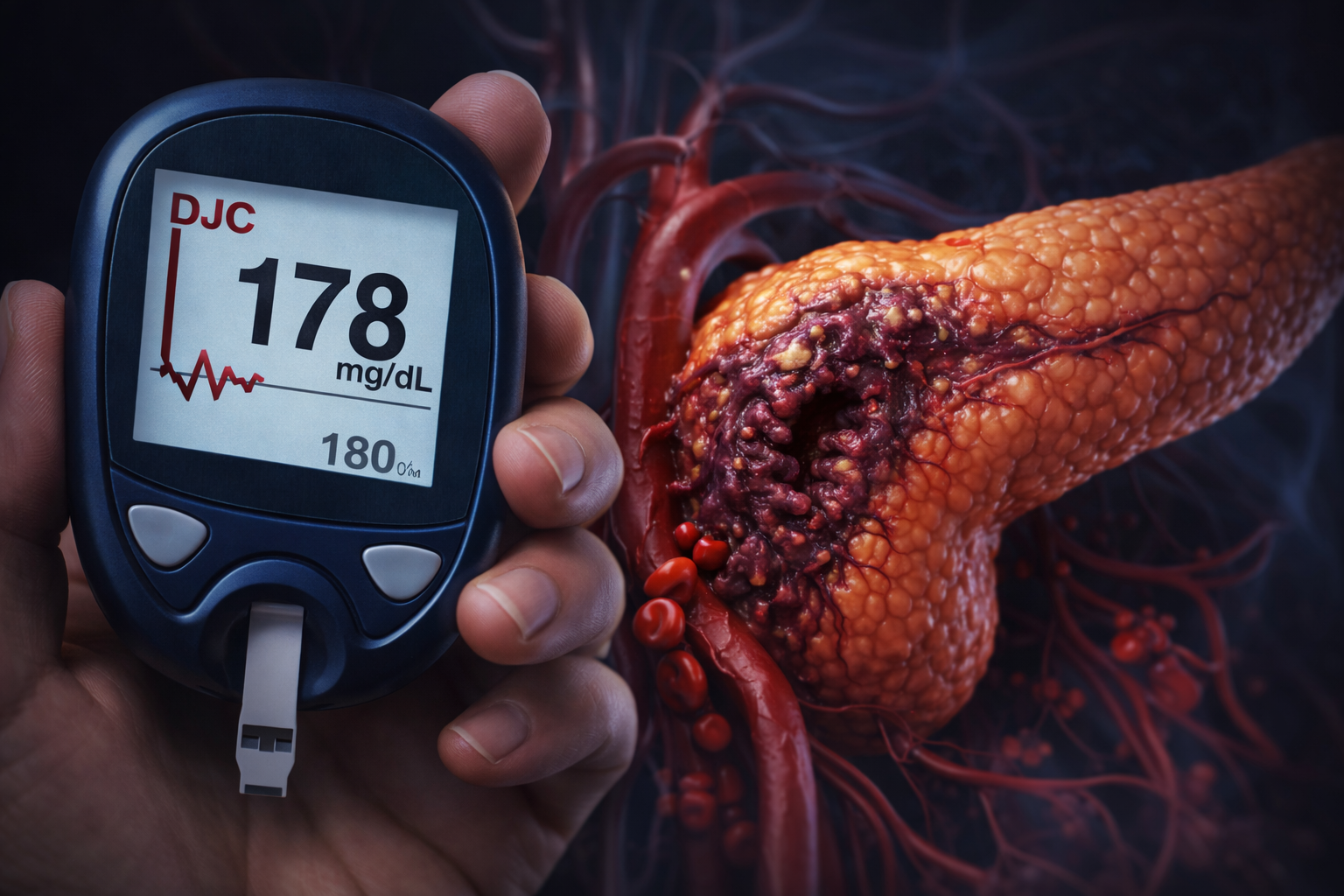
Every bite you take ends up depending on one small organ tucked behind your stomach: the pancreas, and the cells inside it that make insulin. When those cells are worn down, careful eating only slows the slide. You can starve the number for a while, but you cannot diet your way back into cells that are not doing their job.
What wears them down is where it gets interesting, and where we will stop short on purpose. One researcher featured in a presentation our readers keep sending us describes something that starts in the gut and works its way to the pancreas, a "pancreatic parasite" in her words, and argues it is the reason so many careful people watch their A1c rise anyway. She explains what she thinks it is, why spoonfuls of oil and spice from the cupboard do not reach it, and the small morning habit she built instead.
We are not qualified to rule on her theory, and we would rather you hear it from her than from our summary. If you have done everything right and the number still climbs, it is worth an evening.
If you have done everything right and it still climbsHear what she says is wearing down the pancreas →When this is a doctor's job, not a habit's
If your A1c is climbing fast, or it comes with constant thirst, blurry vision, weight you are losing without trying, or numbness in the feet, that is a reason for an appointment this week. Bring your meter log. Nothing in this article replaces that, and nobody should stop or change a prescribed medication on their own.
What Ray did after the olive oil
Ray watched the presentation on a Thursday night, with his daughter on the phone listening along. His first reaction was the one most of us would have: "Sounded like a sermon and a science class at the same time, and I'm not sure I bought either one." What got him was simpler. It was the first explanation he had heard that did not end with "so eat less."
The habit at the end of it is a small bottle of drops, taken in the morning and the evening. The one he ordered is called Glyco Barrier. Before he took any, he read the label at the kitchen table, looked up the names he didn't know, and called his doctor's nurse line to ask if anything in it clashed with his metformin. It didn't, but she told him to keep checking his numbers, and he did.
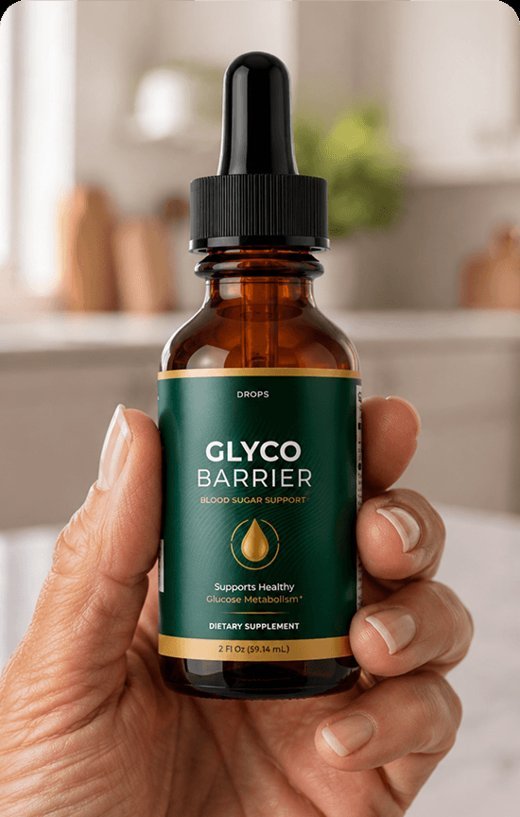
What he read on the label
- Chromium picolinate, a mineral studied for how the body uses insulin and clears sugar after meals.
- Gymnema sylvestre leaf, a traditional herb for healthy glucose metabolism, and the one most tied to quieting sugar cravings.
- Green tea leaf, for antioxidants and gentle metabolic support.
- Coleus forskohlii root, for metabolic function and how the body uses stored fuel.
- Maca root, traditionally used for steadier energy, the opposite of the after-meal slump.
How it went, honestly
- Week 1. Nothing. He said so in an email with the subject line "Well."
- Weeks 2 and 3. The 3 p.m. hunt for something sweet got quieter. His after-dinner readings looked calmer.
- Month 1. His fasting number started coming in under where it had been all summer, most mornings, not all.
- Months 2 and 3. This is the stretch that counts, because an A1c is a three-month average and cannot move faster than your blood cells turn over. His next draw is in November. That is why he reordered the three-month supply instead of a single bottle.
Individual results vary. A habit like this supports what your body is doing; it does not replace your doctor or your medication.
It may be worth a look if you have type 2 or prediabetes, your diet is already careful, and the number keeps creeping up anyway. Talk to your doctor first, or skip it, if you have type 1, you take insulin or a medication that lowers blood sugar, you are pregnant or nursing, or you have any of the warning signs above.
The company's order page shows a 60-day satisfaction promise from the date of purchase. Ray gave himself exactly that window.
Watch it the way Ray did, on a quiet eveningSee the presentation and the morning habit behind it → Sixty days, and your own meter as the judgeTry the drops he keeps next to the coffee maker →P.S. Ray's first email to us was "What am I doing wrong?" His last one said he finally stopped apologizing at the doctor's office. If your next A1c draw is already on the calendar, this is the presentation he watched first.
Continue reading What an A1C Number Does Not Show You Why two people with the same A1C can be having completely different days.Sources and further reading
Violi F, et al. Extra virgin olive oil use is associated with improved post-prandial blood glucose and LDL cholesterol in healthy subjects. Nutrition & Diabetes, 2015.
Schwingshackl L, et al. Olive oil in the prevention and management of type 2 diabetes mellitus: a systematic review and meta-analysis. Nutrition & Diabetes, 2017.
American Diabetes Association. Standards of Care in Diabetes: Glycemic Goals and Hypoglycemia. Diabetes Care, 2026.