Blood Sugar · Food
"What Foods Will Lower My Blood Sugar?" Ernesto Changed Every Plate in the House. The Meter Still Said 165
Oatmeal, berries, eggs, the walk after dinner. His family rebuilt breakfast around him and the number barely moved. Here is the part of the question that no food list answers.
By the Blood Sugar Balance editorial desk · October 2026 · 7 min read
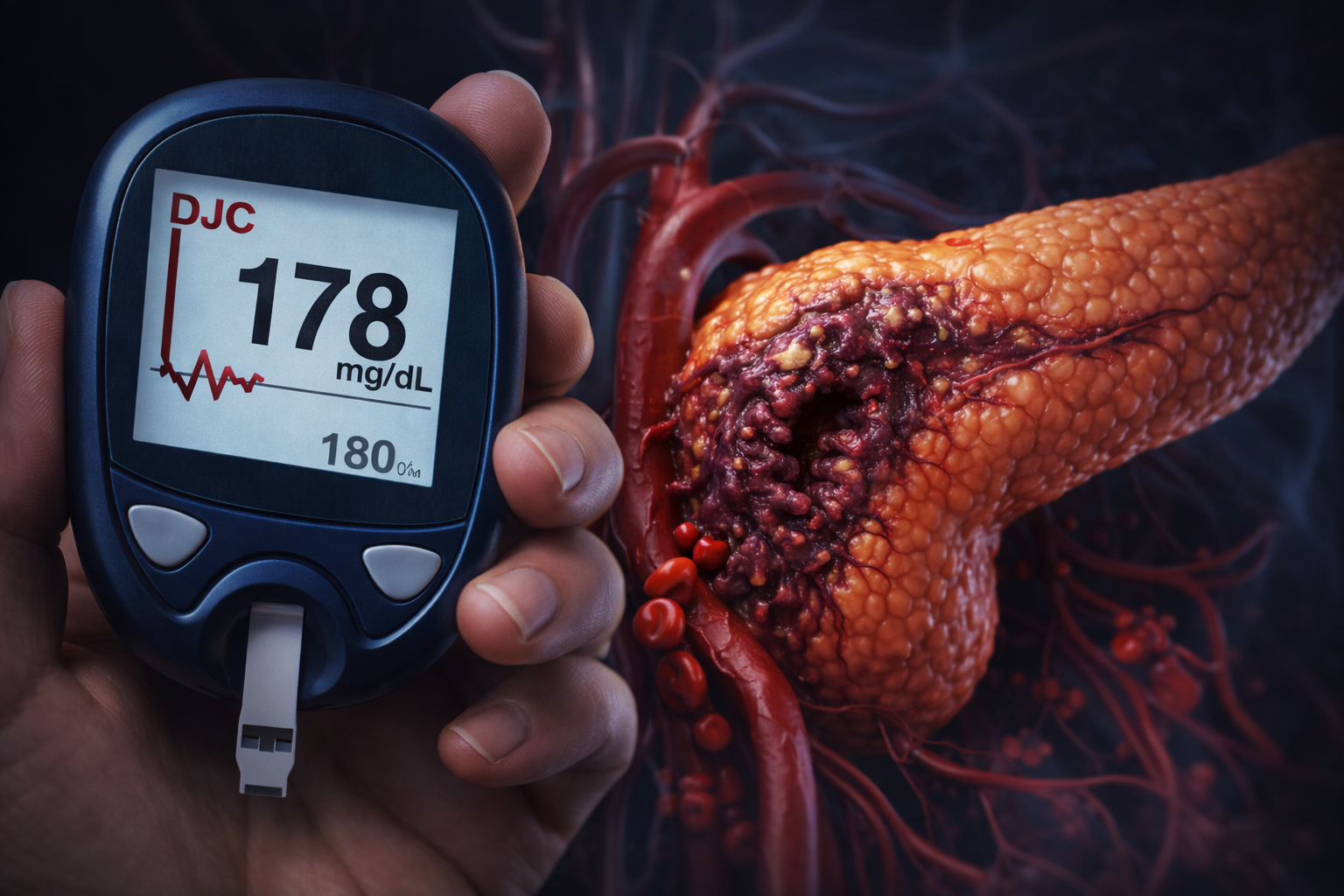
"What foods will lower my blood sugar?" Ernesto, 63, asked his phone that question so many times in August that his grandson started answering for it. "Oatmeal, Grandpa. Berries. Eggs." He knew the list by heart. He was eating the list. And on a Sunday morning in September, at a breakfast table his wife had rebuilt from scratch around him, the meter in his hand read 165.

Ernesto drove a city bus in San Antonio for twenty-six years and has had type 2 diabetes for nine. If you've typed the same question into your phone, you probably know how this part goes. You find the list, you follow the list, and some mornings the list works. Other mornings, after doing everything right, the number is higher than it was when you were eating whatever you wanted. This piece is about those other mornings.
The list is real. It's just not the whole answer.
Let's be fair to the list first, because it matters. Foods with fiber slow down how fast sugar reaches your blood. Protein and healthy fat at breakfast flatten the spike. Beans, lentils, leafy greens, nuts, eggs, plain yogurt, berries instead of juice. A walk of ten or fifteen minutes after you eat helps your muscles pull sugar out of the blood. Every diabetes educator in the country will tell you some version of that, and they're right.
Ernesto's wife, Lupe, did all of it. She threw out the white bread and the sweet pan dulce on the counter. She switched him to steel-cut oats, measured, with walnuts. Eggs on the side. A plate of fruit for the table so nobody felt punished. He walked the block after dinner with the dog.
And it helped, some. His average came down a little over the summer. But not like the list promised, and not on the mornings that scared him most.
The honest version: food decides how much sugar arrives. Something else decides how well your body handles it once it gets there. Ernesto had spent a summer working only on the first half.
Why the same plate gives two different numbers
Here is what puzzled him most. The same breakfast, oats, eggs, a few strawberries, could give him 128 one Tuesday and 165 the next Sunday. Same food. Same portion. Lupe measured.
That swing is the clue. If food were the only thing that mattered, the same plate would give the same number. What changes from morning to morning is how your body responds to the plate: how quickly your pancreas gets the message to release insulin, and how well the insulin you make actually gets used. That response runs on a signal your gut sends the moment food arrives, a hormone you've likely only heard about in commercials for weekly injections. It's called GLP-1, and your body makes its own.
When that natural signal is strong, the insulin shows up on time and the hunger quiets after a meal. When it fades, the insulin arrives late, the sugar lingers, and you're hungry again an hour after a "perfect" breakfast. No food list touches that directly. You can eat the right plate into a slow response, and the meter will still tell on you.
Eating right and the number won't budge?See what a doctor looks at besides the plate →The video his daughter wouldn't stop sending
Ernesto's daughter, a dental hygienist in Austin, had sent him the same link three times. It was a presentation from a physician with thirty years in medicine whose own wife had followed every instruction her doctors gave her, for years, and still watched her number climb until she ended up in the hospital. Ernesto had ignored it twice because it was an hour long. "I drove a bus for twenty-six years. I don't sit still for an hour unless I'm being paid."
The third time, he watched it at the kitchen table after everyone went to bed.
The doctor describes the night he stopped asking how to replace what his wife's body wasn't doing and started asking what was stopping it from doing that job on its own. He walks through a study of identical twins that changed his thinking, a short morning routine built around an ingredient mentioned dozens of times in Scripture, and why it is not the honey-and-cinnamon trick going around online. We're not going to give his routine away here; he explains it step by step, and it deserves to be heard in his words. What Ernesto said afterward was simple: "For the first time somebody talked about the part after the food."
You already fixed the plateWatch the presentation Ernesto's daughter kept sending →Before you change anything
If your readings are climbing week after week, you're thirsty all the time, losing weight without trying, or your vision blurs, call your doctor now. Never stop or skip a prescribed medicine, and if you take insulin or a pill that lowers blood sugar, ask before you add anything new. Keep eating the list. It's still the foundation.
What sits next to the oatmeal now
At the end of the presentation is a bottle of drops meant to support the body's own blood sugar balance between meals, the stretch where Ernesto's Sunday mornings kept going wrong. The one in his kitchen now is Glyco Barrier.
He didn't buy that night. Lupe, who reads every label in the grocery store, read this one twice and took it to their pharmacist to check against his metformin. The pharmacist said it wouldn't interfere and to keep his doctor in the loop, which he does.

What Lupe underlined on the label
- Chromium picolinate. A mineral studied for how well the body responds to its own insulin, the slow part of Ernesto's mornings.
- Gymnema sylvestre leaf. A traditional herb for healthy glucose metabolism, long associated with quieting the pull toward sweets.
- Green tea leaf. Antioxidants and gentle metabolic support.
- Coleus forskohlii root. Supports how the body uses stored fuel.
- Maca root. Traditionally used for steadier energy, so the afternoon doesn't end at the pantry.
How the weeks went
- Week 1. Drops morning and evening, same breakfast, same walk. No change he could see, and he says he didn't expect one.
- Weeks 2 and 3. The mid-morning hunger, the one that used to send him to the fruit bowl by ten, came later.
- Month 1. Fewer Sundays like that Sunday. The same plate started giving more of the Tuesday numbers.
- Months 2 and 3. The stretch that actually shows up on an A1c. His next draw is in December, and for once he isn't dreading it.
Why so slow? Because anything aimed at how your body handles sugar between meals needs weeks of steady use before a lab test can see it, and the company frames results that way. Individual results vary.
It may suit you if you have type 2 or prediabetes, you've already cleaned up your plate, and the number still swings for no reason you can find. Skip it or ask your doctor first if you have type 1, you're on insulin or another glucose-lowering medicine, or you're pregnant or nursing.
The order page shows a 60-day satisfaction promise from the date of purchase. Ernesto's math: "Two months. If the Sundays don't change, I get my money back and I go back to just oatmeal."
Sixty days to see the part after the foodSee the drops that sit next to Ernesto's oatmeal →P.S. His grandson still answers the phone question for him. Last week Ernesto asked it out loud, "what foods will lower my blood sugar," and the boy said, "the same ones, Grandpa, but you watched the video." If you've got the list memorized and the meter still surprises you, start with the hour he finally sat still for.
Continue reading Tired After Eating? What the After-Lunch Crash Says About Your Blood Sugar Another reader, the 2 p.m. slump, and what it was telling her about the hour after food.Sources and further reading
American Diabetes Association. Nutrition Therapy and Facilitating Positive Health Behaviors, Standards of Care in Diabetes, 2026.
National Institute of Diabetes and Digestive and Kidney Diseases. Diabetes Diet, Eating, and Physical Activity.
Nauck MA, Meier JJ. Incretin hormones: their role in health and disease. Diabetes, Obesity and Metabolism, 2018.