Blood Sugar · Type 2 · National Diabetes Month
Diabetes Machine Without Needle? Gloria Almost Bought the $79 Watch From the Ad. Her Pharmacist Asked Her One Question
Is there a blood sugar machine that works without a needle? What the FDA says about the watches and rings in the ads, what the real no-fingerstick options are, and why a better meter still can't change the number it's reading.
By the Blood Sugar Balance editorial desk · November 2026 · 7 min read
Gloria, 64, worked the front desk at a dental office in Tucson for twenty-six years. She has watched a lot of people flinch at needles, and since her type 2 diagnosis four years ago she has become one of them. Four years of fingersticks. Calluses on three fingers. A little bloody spot on the kitchen napkin every morning.

So on Saturday, when an ad came up on her tablet for a smartwatch that "reads your blood sugar through the skin, no needles," she had her credit card halfway out of her wallet. Then she stopped, typed diabetes machine without needle into the search bar, and decided to ask the pharmacist on Monday first. That turned out to be the smartest thing she did all weekend.
Is there a diabetes machine without a needle?
Here's what Gloria's pharmacist told her, and what the FDA has said publicly:
- The watches and rings in those ads are not approved for this. The FDA has warned people not to use smartwatches or smart rings that claim to measure blood sugar by themselves, without piercing the skin. None has been authorized to do it, and a wrong reading can lead to a wrong dose of insulin or other diabetes medicine, which can push sugar dangerously low.
- Continuous glucose monitors (CGMs) are real, and they are close to needle-free. A small sensor sits on the back of the arm or the belly. A tiny, flexible filament goes just under the skin when you put it on, which most people say they barely feel, and then it reads your sugar day and night for one to two weeks. No daily fingersticks.
- Some are sold without a prescription now, mostly for people who don't use insulin. If you do use insulin, your doctor will usually prescribe a different model, and many insurance plans and Medicare cover them for people who qualify.
- A smartwatch can display numbers from an approved sensor. That's different from the watch measuring sugar on its own.
Ask your doctor or pharmacist which one fits your medicines, and keep a regular meter in the drawer for the times a sensor reading doesn't match how you feel.
Tired of watching a number you can't move?See what a physician says the meter can't show you →Gloria got the sensor. It helped, but…
Gloria's doctor wrote her a prescription for a real sensor that same week. She loves it. No more fingersticks, no more bloody napkin. She can hold her phone near her arm at the grocery store and watch what a muffin does.
And that's how she found out something nobody had warned her about. With a reading every few minutes, she could see her sugar climb after breakfast even when breakfast was "good." She could see it sitting at 140 at three in the afternoon. She could see it drift up overnight while she slept. "Before, I had one bad number a day," she said. "Now I've got two hundred and eighty-eight of them."
A better machine is a better window. It isn't a better body. It shows you the number more often; it does nothing to change what the number is.
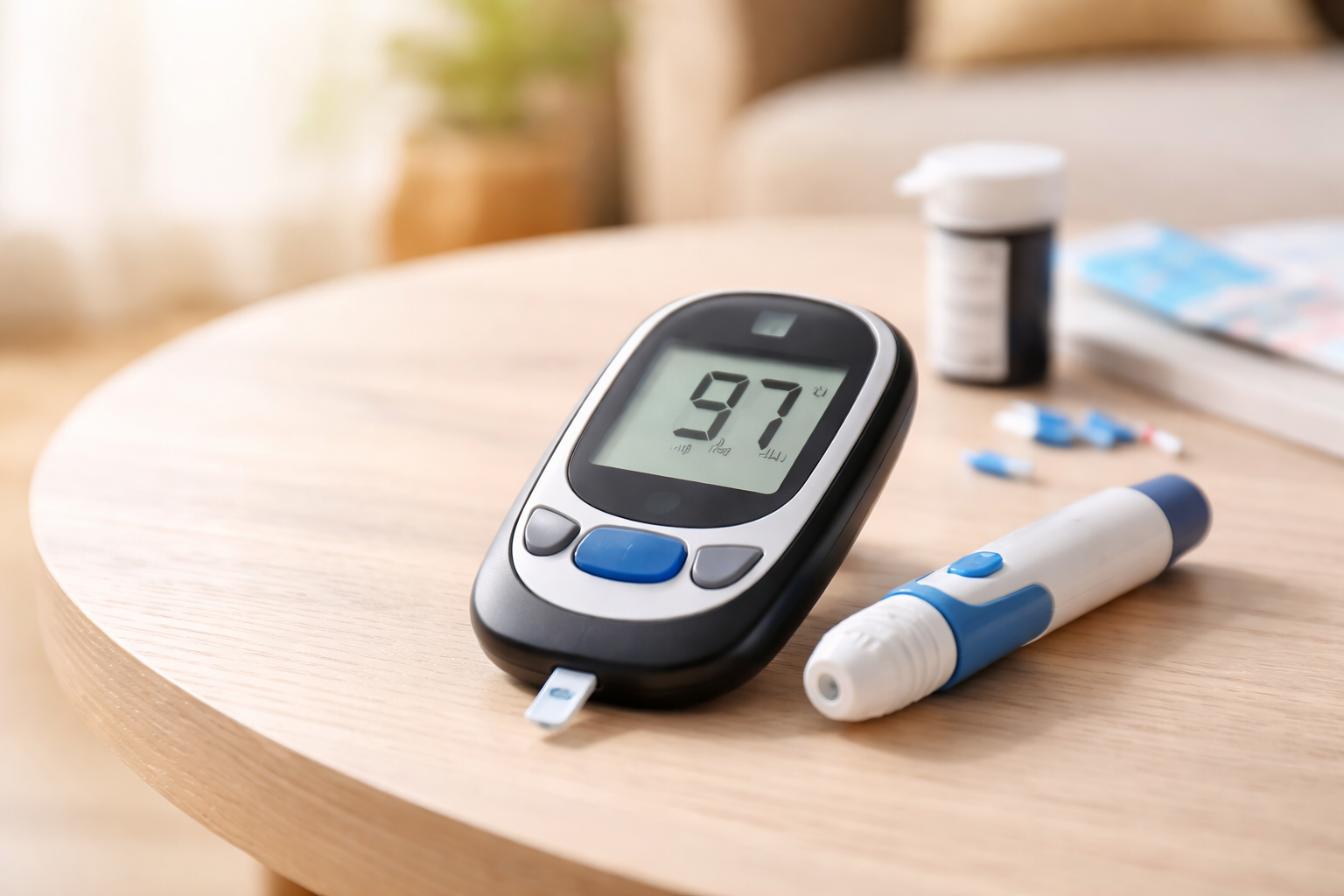
What the sensor showed her that the pamphlet never did
The pattern Gloria kept seeing was the same one so many of you write to us about: the number climbing after meals even with small portions, the 3 p.m. pull toward something sweet, the feeling of being hungry again two hours after eating. She was doing everything right and her body wasn't getting the message that she'd already eaten.
That last part may be the clue. After a meal, the gut sends out a natural messenger that does two jobs at once: it tells the brain "you're full," and it tells the body "use your insulin now." When that signal fades, the cravings get louder and the number keeps climbing, no matter how good the meter is.
A physician with thirty years in practice built a whole presentation around that signal, after watching his own wife's A1c climb for three years while she followed every instruction until the night she ended up in the hospital. He walks through a study of identical twins with the same DNA where only one had type 2, and a short morning step with an oil mentioned many times in Scripture. It isn't the honey-and-cinnamon recipe you've seen online. Which oil, what goes with it, and when, he explains himself.
Hungry two hours after a meal and the sensor climbing anyway?Watch the morning routine he explains →What Gloria watched at the kitchen table
The link came from Lupe, 67, who used to be the hygienist two chairs down from Gloria's desk and still calls every Sunday. Lupe had been watching her own sensor for a year. "You've got the window now," she told Gloria. "Watch this before you spend another seventy-nine dollars on a better window."
Gloria watched it on the tablet, the same one with the watch ad on it, with a cup of coffee and a notepad. At the end, the presentation introduces Glyco Barrier, a daily formula built to support that natural signal. She took the notepad to her doctor, who told her to keep her metformin and her sensor, to watch for lows if anything changed, and that there was no reason not to try it alongside what she was already doing.

Individual results vary, and the sensor will tell her the truth either way. That's the point of having it.
You can watch the number every five minutes. Can you change it?See the routine before your next A1c →So, is there a diabetes machine without a needle?
Not one that works the way the watch and ring ads promise: the FDA has warned against devices that claim to read blood sugar through the skin on their own. The closest real thing is a continuous glucose monitor, a small sensor with a thin filament under the skin that ends daily fingersticks for most people. Ask your doctor or pharmacist which one fits your medicines, and never change an insulin dose based on a device that isn't approved. And remember that any meter only shows the number. What moves it is what happens inside, which is worth a conversation with your doctor. This page is for information only and isn't medical advice.
P.S. Gloria deleted the watch ad. She kept the coupon code, though, "in case they ever get approved." If you're the one with calluses on three fingers and a number that won't come down no matter how you measure it, here's the presentation Lupe sent on a Sunday. And if you're not sure which number on your lab report should worry you, read what a dangerous A1c level really looks like.