Blood Sugar · Diabetic Diet
Diabetic Diet, but Your A1c Is Still High? Charlene Followed the Plate Method to the Ounce for a Year. Her Number Went Up Anyway
Half the plate vegetables, a quarter protein, a quarter carbs, measured every meal. A year later her A1c had climbed from 7.2 to 7.6. Here's what a diabetic diet can do, what it can't, and the piece her dietitian's handout never mentioned.
By the Blood Sugar Balance editorial desk · October 2026 · 7 min read
Charlene, 61, has a laminated card on her refrigerator door. It's the plate-method handout her dietitian gave her the week she was diagnosed: half the plate non-starchy vegetables, a quarter lean protein, a quarter carbohydrates, water to drink. She followed her diabetic diet for a full year like it was scripture. She measured her rice in a half-cup scoop. She knows the carb count of a medium apple by heart. And last month, at her one-year visit in Charlotte, North Carolina, her A1c came back 7.6. It had been 7.2 when she started.
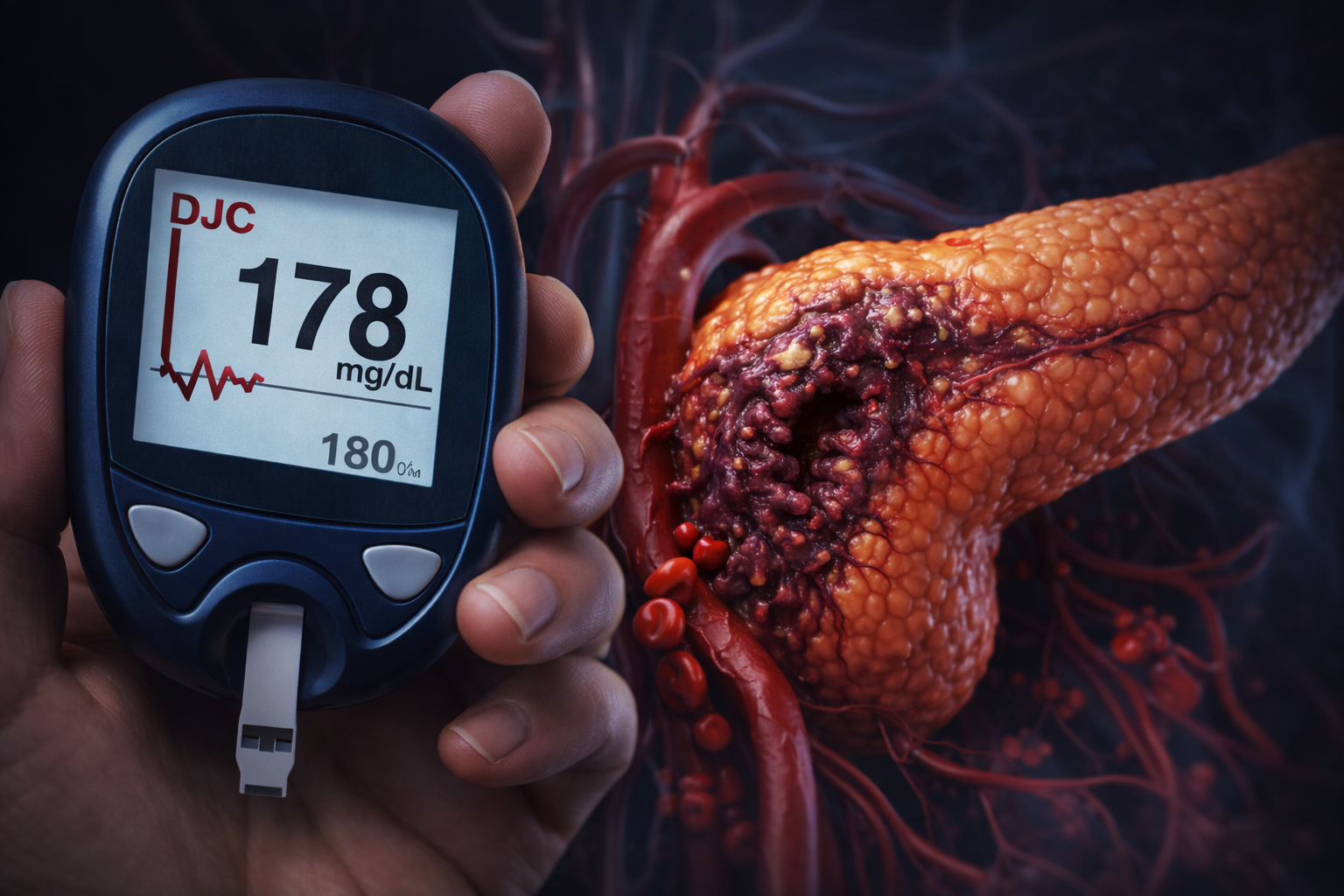
"I didn't cheat," she told us, and you could hear that she'd said it to herself a hundred times. "Not at Thanksgiving, not at my grandson's birthday. I ate the cake-less version of every holiday for a year. And the number went the wrong way."
If you're doing the diabetic diet and your A1c is still high, this is for you. Not because the diet is wrong. Because there's a part of the story the handout on Charlene's refrigerator was never designed to tell.
First, what a diabetic diet really does
We want to be fair to the plate method, because it's good advice and it helps a lot of people:
- It lowers the spike after each meal. Less refined starch and more fiber means sugar enters the blood more slowly. That's real, and you can see it on a meter.
- It usually brings some weight down, which helps the body respond better to its own insulin.
- It keeps portions honest, which matters more than any single "superfood."
But notice the shape of all three. They work on what goes in. They don't work on what your body does with it once it's there. And for a lot of people with type 2, especially after the first few years, that second half is where the trouble starts to live.
Why the number can climb when the plate is perfect
Charlene's dietitian, to her credit, didn't accuse her of sneaking food. She said what doctors often say: type 2 can be "progressive," and sometimes the number drifts up even when someone does everything right. That's true as far as it goes. But "progressive" is a description, not an explanation, and Charlene wanted to know why.
Here's the piece we think is missing from most diabetic-diet advice. When you eat, your gut releases a messenger called GLP-1. You've probably heard the name from the weekly-shot commercials, but your body makes its own, every single meal. It does two jobs at once: it tells your pancreas to release insulin at the right moment, and it tells your brain you've had enough to eat.
When that natural signal fades, two things tend to happen together. The insulin your body makes doesn't get used as well, so the number drifts up even after a "perfect" plate. And the "I'm full" message goes quiet, so the cravings get louder. Charlene had both. She was eating a measured dinner at 6 p.m. and standing at the pantry door at 9, holding onto the frame so she wouldn't open it.
If your plate is perfect and your number isn'tHear a physician explain what the handout leaves out →What Charlene tried on top of the diet
- Cutting her carb quarter in half. Her readings dipped for two weeks, then she was so hungry at night she ate more than she'd saved. Her dietitian told her to put the rice back.
- Cinnamon capsules. A friend from her Bible study swore by them. Charlene took them for three months. Her meter didn't notice.
- Apple cider vinegar before dinner. It gave her heartburn and, as far as she could tell, nothing else.
- Walking after supper. This one helped, a little, and she still does it. We'd recommend it to anyone. It just wasn't enough to turn the year around.
The presentation from the church kitchen
The turn came from the church kitchen, of all places. Charlene runs the Wednesday supper at her church, and a woman who volunteers beside her, Jeanette, 66, has had type 2 for fourteen years. Jeanette noticed Charlene skipping the cornbread every week with a face like she was at a funeral. One Wednesday, drying dishes, Jeanette said, "Honey, it was never the cornbread," and texted her a link.
It was a presentation from a physician who taught at one of the country's most respected medical schools and spent three decades giving patients the same plate-method instructions Charlene had on her refrigerator. Then someone he loved stopped responding to any of it. He went back into the research looking for what the standard advice was missing, and he describes something a routine checklist was never built to catch, something he believes quietly interferes with how the body uses its own insulin.
He walks through a short morning routine built around an oil, and he is very particular about which kind and how it fits into the morning. He also explains why it isn't the honey-and-cinnamon drink that's been all over Facebook, which made Charlene laugh out loud, since she'd tried that too. We won't give his routine away here. It makes more sense in his words than in ours.
Charlene's reaction, after watching it at her kitchen table with the laminated card in front of her: "He wasn't telling me to eat less. He was telling me why eating right hadn't been enough."
A year of doing everything right deserves an answerWatch the explanation Jeanette sent Charlene →Before you change anything
Keep your diabetic diet. Keep your walks. If you take insulin or a pill that can cause lows, don't add anything new or cut food further without talking to your doctor. And if your readings are climbing fast, you're very thirsty, losing weight without trying or your vision is blurring, call your doctor now, not next month.
What sits next to the laminated card
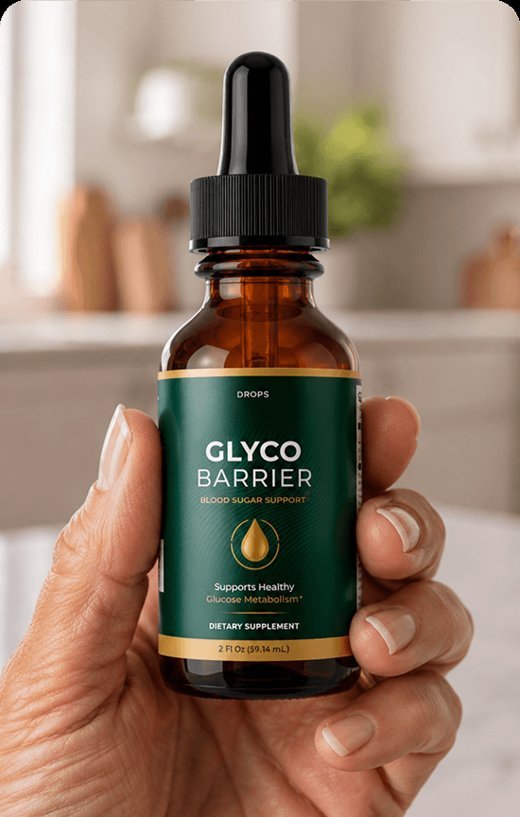
At the end of that presentation is a bottle of drops made to support the body's own blood sugar balance between meals, which is exactly the stretch where Charlene's 9 p.m. pantry standoff lived. The one on her counter is Glyco Barrier.
She didn't order it that night. She printed the label and took it to her pharmacist, who said nothing on it should conflict with her metformin and told her to bring it up at her next visit. She did, and her doctor said to keep logging her readings so they'd both see what changed.
What she underlined on the label
- Chromium picolinate. A mineral studied for how well the body responds to its own insulin. "That's the half the plate doesn't cover," she wrote in the margin.
- Gymnema sylvestre leaf. A traditional herb for healthy glucose metabolism, long associated with quieting the pull toward sweets. She drew a little pantry door next to it.
- Green tea leaf. Antioxidants and gentle metabolic support.
- Coleus forskohlii root. Supports how the body uses stored fuel.
- Maca root. Traditionally used for steadier energy through the afternoon, the hours when she used to crash after lunch.
How the next three months went
- Weeks 1 and 2. Same diet, same walks, drops morning and evening. The 9 p.m. pantry pull was a little quieter. She wasn't sure she wasn't imagining it.
- Weeks 3 to 6. Her after-dinner readings stopped jumping into the 170s. Most nights they landed in the 130s.
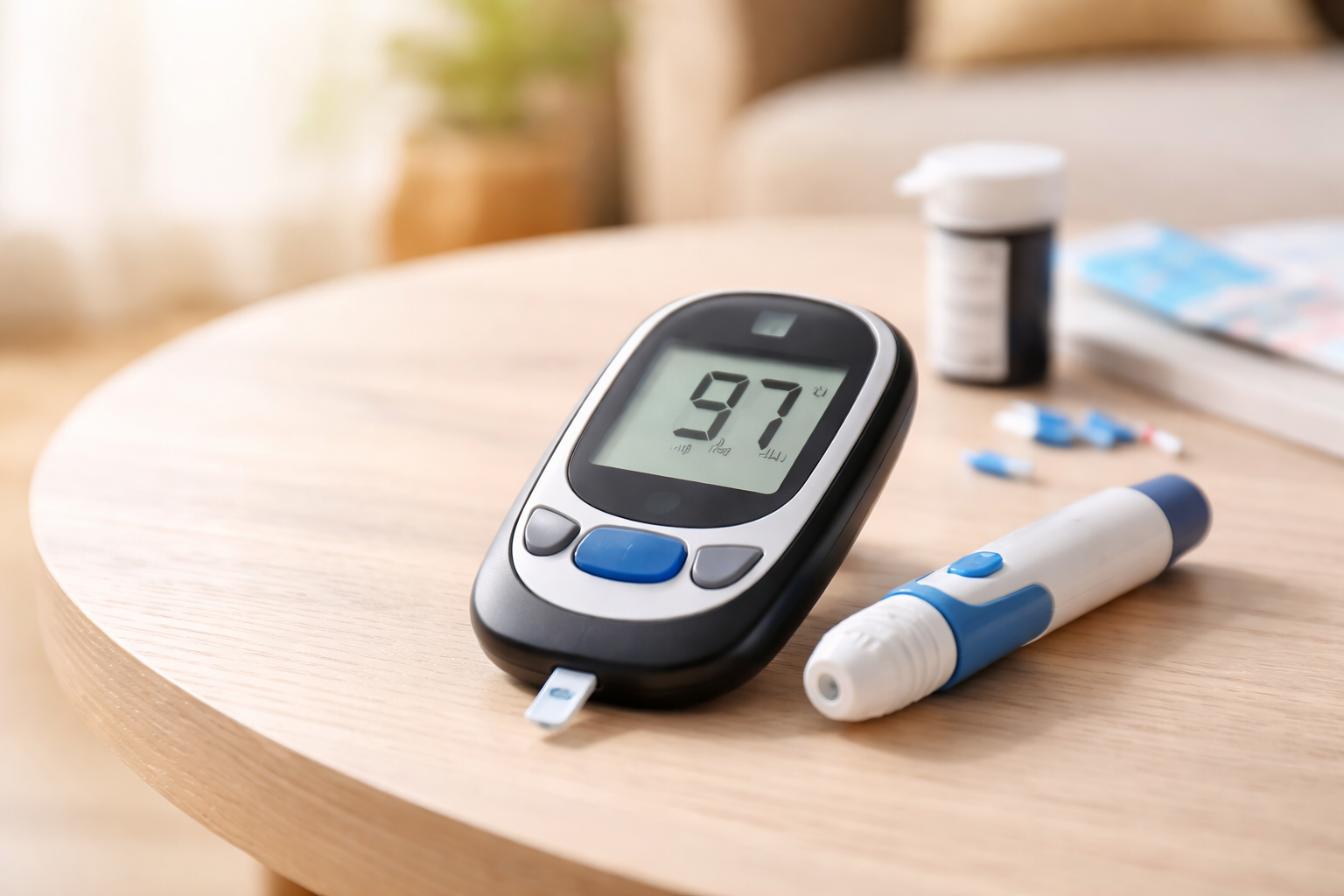
- Weeks 7 to 10. A fasting reading of 97, the first under 100 in over a year. She texted the picture to Jeanette before she texted her daughter.
- Month 3. Her A1c came back 7.0. Her doctor said to keep doing exactly what she was doing and recheck in three months.
Was it the drops, the diet, the walks or all of it? Charlene would tell you all of it, and she's right not to give the credit to any one thing. Anything aimed at how your body handles sugar between meals needs weeks of steady use before a lab can see it. Individual results vary, and plenty of people need medication no matter how carefully they eat. There's no shame in that.
It may suit you if you have type 2 or prediabetes, you're following your diet, and the number or the cravings keep pushing back. Skip it or ask your doctor first if you have type 1, you take insulin or another glucose-lowering medicine, or you're pregnant or nursing.
The order page shows a 60-day satisfaction promise from the date of purchase. Charlene's math: "I gave the plate method a year. I can give this sixty days and a meter log."
Keep the plate. Add the missing halfSee the drops under Charlene's refrigerator card →P.S. Last Wednesday Charlene ate a piece of cornbread at church supper, a small one, and checked her meter two hours later. 141. Jeanette high-fived her over the dish rack. If you're the one standing at the pantry door tonight with a perfect plate behind you, start with the presentation Jeanette sent.
Continue reading How to Lower A1c Without Medication? Walt's Doctor Gave Him 90 Days Another reader on a deadline, and what his checklist missed in month one.Sources and further reading
American Diabetes Association. Nutrition therapy and the Diabetes Plate Method. Standards of Care in Diabetes.
Nauck MA, Meier JJ. Incretin hormones: their role in health and disease. Diabetes, Obesity and Metabolism, 2018.
Reynolds AN, et al. Advice to walk after meals is more effective for lowering postprandial glycaemia in type 2 diabetes mellitus than advice that does not specify timing. Diabetologia, 2016.