Blood Sugar · A1c
How to Lower A1c Without Medication? Walt's Doctor Gave Him 90 Days Before the First Prescription. Here's What He Did, and What His Checklist Missed
His A1c came back 6.9 and his doctor made him a deal: three months to bring it down on his own, then they'd talk pills. Here's what moves an A1c without medication, what doesn't, and the signal his checklist never looked at.
By the Blood Sugar Balance editorial desk · October 2026 · 7 min read
"How to lower A1c without medication." Walt, 58, typed it with two fingers in the waiting room of his doctor's office in Columbus, Ohio, while his wife pretended not to read over his shoulder. Ten minutes earlier the doctor had told him his A1c was 6.9. Type 2 diabetes, by the book. Then she offered him a deal: "Ninety days. Show me what you can do on your own, and then we'll decide together about medication."
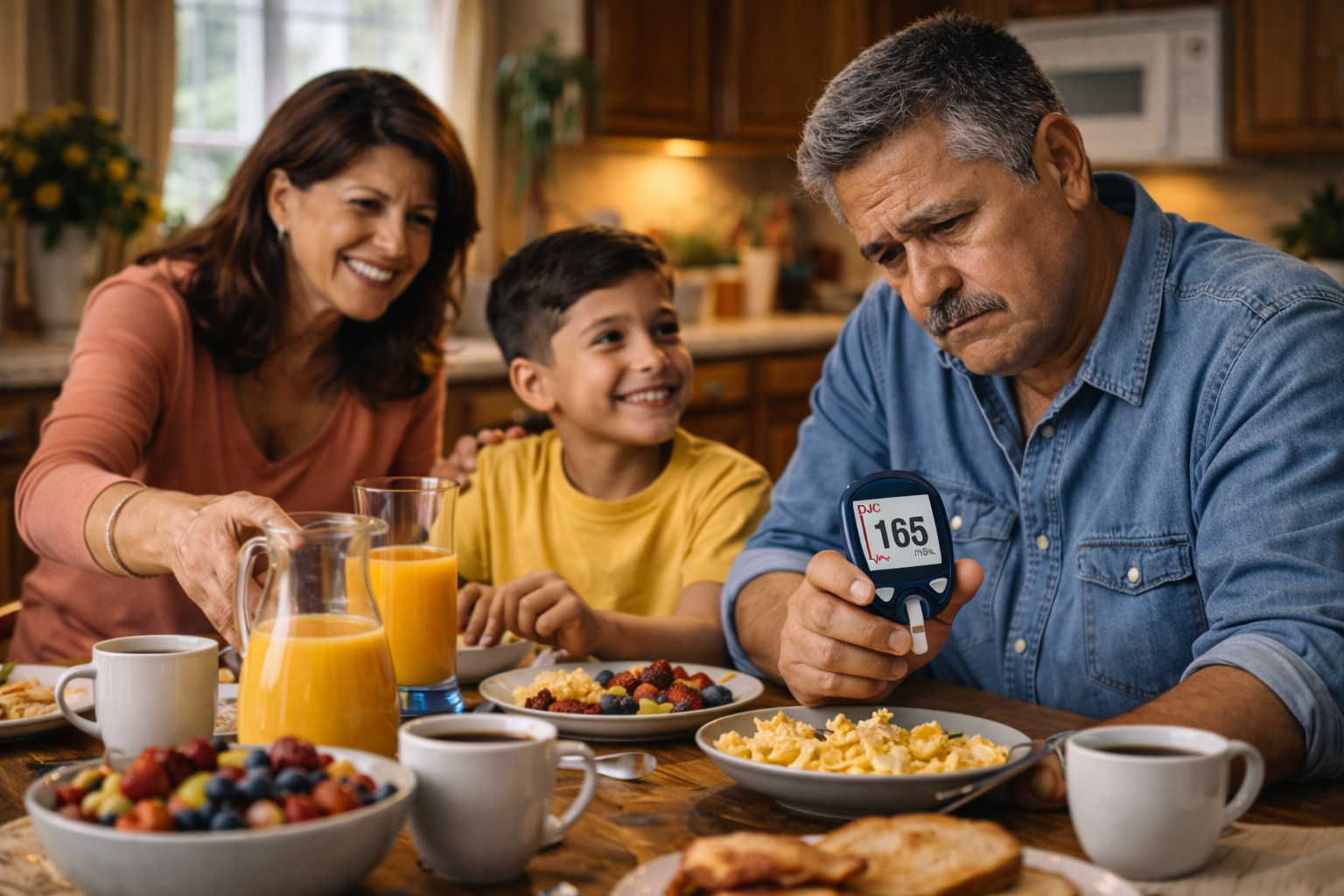
Walt is a union electrician, thirty-three years on job sites, and he does not like being told he has a condition. His father took pills for diabetes for twenty years and lost two toes anyway. So Walt took the deal like a contract. This is what he did with his ninety days, the part that backfired, and the question he says he should have asked on the first day.
First, the honest rules for lowering A1c without pills
A few things worth knowing before you start, because nobody handed them to Walt:
- This is for people whose doctor agrees. If you're newly diagnosed or prediabetic and your doctor gives you a window to try, good. If you're already on a medication, never stop or cut it on your own. That's a conversation, not a decision you make from a blog.
- Your A1c is a three-month average. It reflects sugar stuck to red blood cells that live about three months, so ninety days is the honest test window. Daily meter readings tell you which way you're heading long before the lab does.
- The basics really do work for a lot of people. Meals built around protein and vegetables, a walk after eating, better sleep and a little weight off can all move the number. That's not marketing. That's why doctors offer the window.
What Walt did in the first month, and how it backfired
Walt went at it like a rewiring job: rip everything out. No bread, no rice, no potatoes, no fruit. Black coffee for breakfast. A chicken breast and a salad for lunch. Dinner the same. He also started walking four miles every evening, hard.
The first two weeks his morning readings fell from the 140s into the 110s, and he was thrilled. Then week three hit. By 7 p.m. he was standing in the pantry eating peanut butter off a spoon. At 10 p.m. it was his grandkids' cereal, straight from the box, in the dark. He woke at 2 a.m. starving. His wife found three empty granola bar wrappers in his work truck.
"I was doing everything right all day," he told us, "and by night my body was like a dog that broke off its chain." His readings crept back up into the 130s. At the end of the first month he'd lost seven pounds and almost none of his progress.
If your days are perfect and your nights fall apartHear what a physician says is behind that pull →The signal his checklist never looked at
Here's what was happening, and it's the part almost every "lower your A1c naturally" list skips. When you eat, your gut sends out a messenger that does two jobs at once. It tells your pancreas to release insulin at the right moment, and it tells your brain you've had enough. That messenger is called GLP-1. Most people only know the name from the weekly-shot ads, but your body makes its own, every meal.
When that natural signal runs weak, two things go wrong together: the insulin you make doesn't get used as well, so the number drifts up even on a good day, and the "I'm full" message gets quiet, so the hunger gets loud. Strip your meals down to almost nothing on top of that and you turn the hunger up further. That's the dog on the chain. It was never a willpower problem, and Walt has more willpower than most people we've met.
What he changed for months two and three
His doctor's nurse educator saw his log and laughed, kindly. She rebuilt his plan, and it's worth doing whether or not you read another word here:
- Three real meals. Protein and vegetables at each, plus a modest portion of slow carbs: beans, oats, a small potato. No more black-coffee breakfasts.
- A ten-minute walk right after each meal, instead of one punishing four-mile march at night. Walking after eating blunts the spike when it happens.
- A bedtime. Same time every night. Short sleep makes the next day's numbers and cravings worse.
- Fiber first. Salad or vegetables before the rest of the plate.
His readings steadied. The nights got easier. But the 7 p.m. pull never fully let go, and Walt, who knew exactly what week three had looked like, didn't trust it. That's when his brother-in-law sent him a link.
The presentation his brother-in-law sent
His brother-in-law Ed, a retired mail carrier with type 2 for a decade, texted him one line: "Watch this before you starve yourself again." It was a presentation by a physician who taught at one of the country's most respected medical schools and spent three decades giving patients the same instructions: watch the sugar, take the medication, walk after meals. Then someone he loved stopped responding to any of it.
He talks about what he went back into the research to find: something a routine checklist was never built to catch, which he believes quietly interferes with how the body uses its own insulin. He describes a short morning routine built around an oil, and he's very particular about which kind and how it fits into the morning. And he explains why it isn't the honey-and-cinnamon drink that's been all over social media. We won't give his routine away here. It makes more sense in his words than in ours.
Walt's reaction, after he watched it twice: "Nobody told me the hunger and the number were the same wire."
You've got a window and you don't want to waste itWatch the explanation Ed sent Walt →Before you change anything
Tell your doctor you want to try the lifestyle route first and agree on how you'll measure it. If you're already on insulin or a pill that can cause lows, don't cut calories hard or add anything new without asking. If your readings climb fast, you're very thirsty, losing weight without trying, or your vision blurs, call your doctor now.
What sits in his lunch box
At the end of that presentation is a bottle of drops made to support the body's own blood sugar balance between meals, the exact stretch where Walt's evening pull lived. The one in his lunch box is Glyco Barrier.
He didn't order it on the spot. He's an electrician: he reads the spec sheet first. He printed the label and took it to his pharmacist, who said there was nothing on it that would cause trouble with his blood pressure pill and told him to mention it at his 90-day visit. He did.
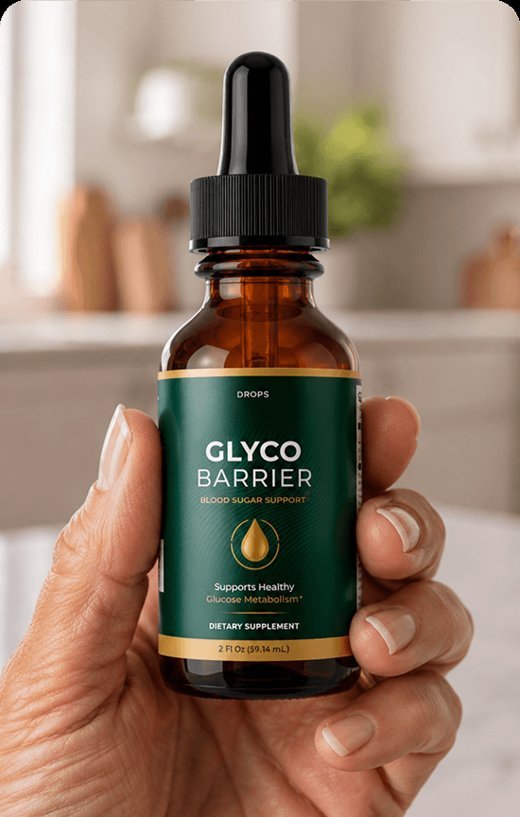
What he circled on the label
- Chromium picolinate. A mineral studied for how well the body responds to its own insulin. "That's the connection," he wrote next to it.
- Gymnema sylvestre leaf. A traditional herb for healthy glucose metabolism, long associated with quieting the pull toward sweets. He drew an arrow from it to the word "pantry."
- Green tea leaf. Antioxidants and gentle metabolic support.
- Coleus forskohlii root. Supports how the body uses stored fuel.
- Maca root. Traditionally used for steadier energy through the afternoon, when a job-site day drags.
How his 90 days finished
- Weeks 5 and 6. The new meals, the walks, the drops morning and evening. The 7 p.m. pantry trips got shorter.
- Weeks 7 and 8. His first fasting reading under 100. No more 2 a.m. wake-ups for food.
- Weeks 9 to 12. His evening readings stopped swinging. He'd lost fifteen pounds without the hunger he'd fought in month one.
- Day 90. The lab came back 6.2. His doctor said they'd hold off on medication and recheck in three months, and to keep doing exactly what he was doing.
Was it the drops, the meals, the walks or the sleep? Walt would tell you it was all of them pulling together, and he's right not to credit any one thing. Anything aimed at how your body handles sugar between meals needs weeks of steady use before a lab can see it. Individual results vary, and plenty of people need medication no matter how hard they work. There's no shame in that.
It may suit you if you have type 2 or prediabetes, you're doing the work and the cravings or the number keep pushing back. Skip it or ask your doctor first if you have type 1, you're on insulin or another glucose-lowering medicine, or you're pregnant or nursing.
The order page shows a 60-day satisfaction promise from the date of purchase. Walt's math: "Sixty days inside a ninety-day window. If my log didn't move, I'd send it back. I've paid more for a good pair of boots."
Sixty days inside your own windowSee the drops in Walt's lunch box →P.S. Walt's father never got a window. Walt keeps the lab printout with "6.2" in his truck visor, next to a photo of his dad. If you're sitting in a waiting room right now with your own ninety days ahead of you, start with the presentation Ed sent.
Continue reading How to Lower A1c Fast? Darlene's Surgeon Gave Her Eight Weeks to Get Under 8 Another reader with a deadline, and what an A1c can and can't do in eight weeks.Sources and further reading
Nathan DM, et al. Translating the A1C assay into estimated average glucose values. Diabetes Care, 2008.
Reynolds AN, et al. Advice to walk after meals is more effective for lowering postprandial glycaemia in type 2 diabetes mellitus than advice that does not specify timing. Diabetologia, 2016.
Nauck MA, Meier JJ. Incretin hormones: their role in health and disease. Diabetes, Obesity and Metabolism, 2018.