Supplements · Blood Sugar
Does Cinnamon Really Help Blood Sugar? Why Ruth's Pharmacy Capsules Never Moved Her A1c
She took two capsules a day for a year. Her meter shrugged. What the research actually says about cinnamon, and the question she should have asked about the capsule itself.
By the Blood Sugar Balance editorial desk · October 2026 · 7 min read
"Does Ceylon cinnamon lower blood sugar, or did I waste a year?" That was the subject line of the email Ruth, 67, sent us at the end of September. She is a retired bank teller from Lexington, Kentucky, type 2 for nine years, and she had done exactly what the label on the pharmacy bottle told her: two cinnamon capsules a day, with meals, for twelve months. Her A1c went from 7.6 to 7.7.
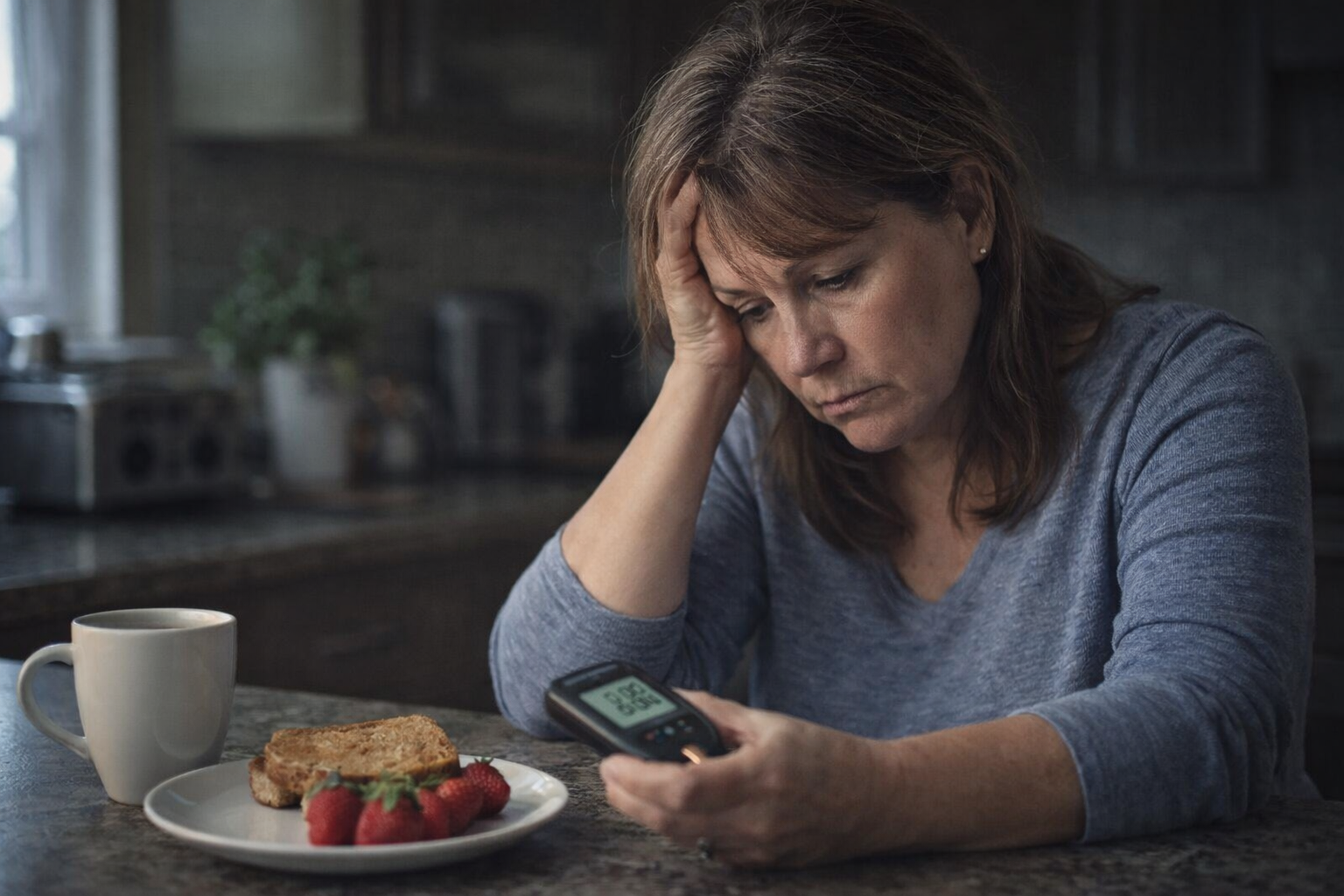
If you've stood in the supplement aisle staring at the cinnamon bottles, you've probably asked the same thing. The honest answer is more interesting than yes or no, and it says more about the capsule than about the spice.
What the research actually found
Cinnamon has been studied for blood sugar for more than twenty years, and the results are a genuine mixed bag. Several reviews pooling the trials found a modest dip in fasting glucose in some people with type 2. When researchers looked at A1c, the three-month number your doctor cares about, the effect was small and inconsistent from study to study. Some trials saw something. Others saw nothing at all.
Why so inconsistent? Part of it is that "cinnamon" isn't one thing. Most of the cheap powder sold in this country is cassia, not Ceylon, and the two differ in what they contain. Part of it is dose. And part of it, the part nobody puts on the bottle, is form: a dry powder packed into a capsule, swallowed, and broken down in the stomach with everything else you ate.
In plain English: cinnamon may nudge a meal. The studies don't show a spice capsule reliably moving the number that reflects your last three months, which is exactly the number Ruth was watching.
Ruth's year, in her own notes
Ruth is a former teller, so she kept a ledger. Her fasting readings in the first month on the capsules: a few points better on some mornings, a few worse on others. By month four she couldn't see a pattern at all. By month twelve she had spent a little over two hundred dollars and her A1c had gone up a tenth of a point.
She tried the obvious fixes. She switched brands, twice, and finally paid more for one that said "Ceylon" on the front. She started sprinkling the powder on her morning oatmeal as well. She asked her pharmacist, who told her, kindly, that cinnamon "can't hurt, but don't expect much."
"That's the part that bothered me," she wrote. "People keep sending me videos about cinnamon in the Bible like it's some kind of miracle, and then the actual pills do nothing. Somebody's wrong."

The question nobody asked her
Maybe nobody is wrong. Maybe the spice was never the whole story, and the capsule was never the right way to use it.
The person who changed Ruth's mind was a woman from her Sunday school class who'd had the same experience with the same capsules and then watched a long presentation her grandson sent her. In it, a researcher who spent years inside the drug industry explains why she believes long-time type 2 is often driven by something that settles in the gut and reaches the pancreas, wearing down the very cells insulin depends on. That, in her view, is why kitchen remedies keep "almost" working: they show up after the damage, at the wrong door.
She also explains why she stopped putting cinnamon in capsules and on oatmeal herself, which compound she pulled out of it, what she paired it with, and the form she chose instead so it wouldn't be lost in the stomach. We are not going to try to retell that part. It's her work, she shows it step by step, and it's the reason Ruth finally understood why her twelve-month ledger looked the way it did.
A year of capsules and the number didn't move?See why she stopped swallowing cinnamon →When to stop experimenting and call your doctor
If your fasting readings are climbing week after week, if you're always thirsty, losing weight without trying, or seeing blurry vision, put the supplements down and get an appointment. If you take insulin or a sulfonylurea, talk to your doctor before adding anything meant to affect blood sugar, from the kitchen or from a bottle. And never stop a prescribed medicine on your own.
What sits on Ruth's counter now
The capsules are gone. What replaced them came out of that presentation: a small bottle of drops she takes morning and evening. The one she and her friend from Sunday school use is Glyco Barrier.
She did not order it that night. "I'd already been burned by the cinnamon aisle." She read the label, looked up every ingredient, and took it to her pharmacist to check against her metformin. What tipped her was simple: it wasn't one more spice for breakfast. It was aimed at the place her ledger kept pointing to.
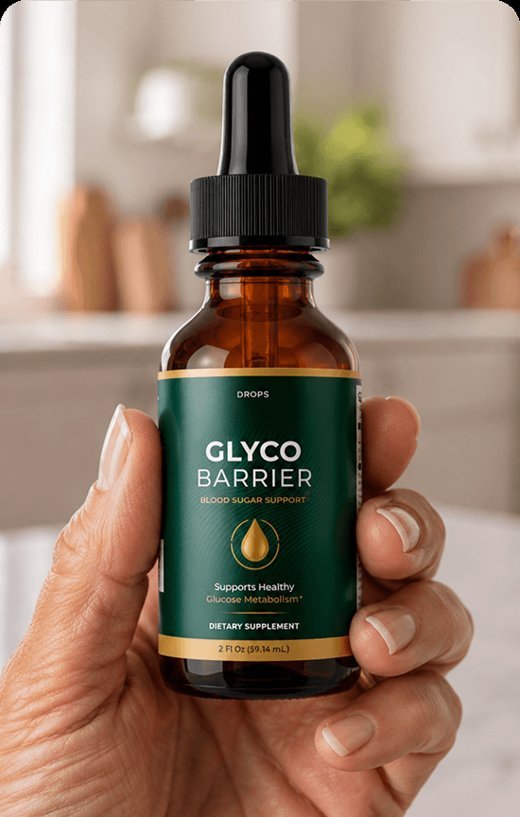
What's on the label, and why she cared
- Chromium picolinate. A mineral studied for how the body responds to insulin, the side of the problem a spice capsule never reached for her.
- Gymnema sylvestre leaf. A traditional herb for healthy glucose metabolism, long tied to quieting the pull toward sweets.
- Green tea leaf. Antioxidants and gentle metabolic support.
- Coleus forskohlii root. Supports how the body uses stored fuel.
- Maca root. Traditionally used for steadier energy through the day.
Her ledger, the second time
- Week 1. Nothing. She wrote "we'll see" in the margin.
- Weeks 2 and 3. The 3 p.m. trip to the candy dish at her daughter's house stopped happening without her trying.
- Month 1. More fasting readings under her old average than over it. Not every morning.
- Months 2 and 3. The stretch that actually decides an A1c, since the test reflects roughly three months of blood. Her next draw is in December, and for the first time in a year she isn't dreading it.
Why the slow pace? A spice changes one meal at best. Anything aimed at how your body handles sugar between meals works on a longer clock, and the company frames results around weeks of steady use. Individual results vary.
It may suit you if you have type 2 or prediabetes, you've already tried cinnamon or other kitchen remedies, and your three-month number won't budge. Skip it or ask your doctor first if you have type 1, you're on insulin or another glucose-lowering medicine, or you're pregnant or nursing.
The order page shows a 60-day satisfaction promise from the date of purchase. After a year of capsules, Ruth said that was the only reason she was willing to open her wallet one more time.
Before you buy another bottle of cinnamonWatch the presentation Ruth's friend sent her → Sixty days, and your ledger decidesSee the drops that took the capsules' place →P.S. Ruth's subject line asked whether she'd wasted a year. Her answer now: the year taught her where not to look. If your meter has been shrugging at your cinnamon too, start where she did.
Continue reading Olive Oil Recipe for Diabetes: What the Viral Morning Spoon Gets Right, and the Step It Leaves Out Another kitchen remedy, another notebook, and the place in the body a recipe can't reach.Sources and further reading
Allen RW, et al. Cinnamon use in type 2 diabetes: an updated systematic review and meta-analysis. Annals of Family Medicine, 2013.
Leach MJ, Kumar S. Cinnamon for diabetes mellitus. Cochrane Database of Systematic Reviews, 2012.
U.S. Food and Drug Administration. Cinnamon products and coumarin: consumer information.