Recipes · Blood Sugar
Olive Oil Recipe for Diabetes: What the Viral Morning Spoon Gets Right, and the Step It Leaves Out
First it was the honey and pineapple recipe. Now it is olive oil and cinnamon. One reader tried both, kept a notebook, and found out what neither one was built to touch.
By the Blood Sugar Balance editorial desk · October 2026 · 7 min read
The olive oil recipe for diabetes that has been landing in your inbox goes something like this: a tablespoon of extra virgin olive oil on an empty stomach, a squeeze of lemon, sometimes a pinch of cinnamon stirred in, taken every morning before breakfast. The video calls it an old remedy, older than the pharmacy, and the comments are full of people swearing their meter changed in a week.
Joan, 62, a retired church secretary outside Harrisburg, Pennsylvania, made it every morning for a month. Before that, she had spent the summer on the honey recipe. She wrote to us in late September, and her first line was the one we hear more and more: "The honey one failed. Is the oil one any different, or am I just going to be disappointed again?"
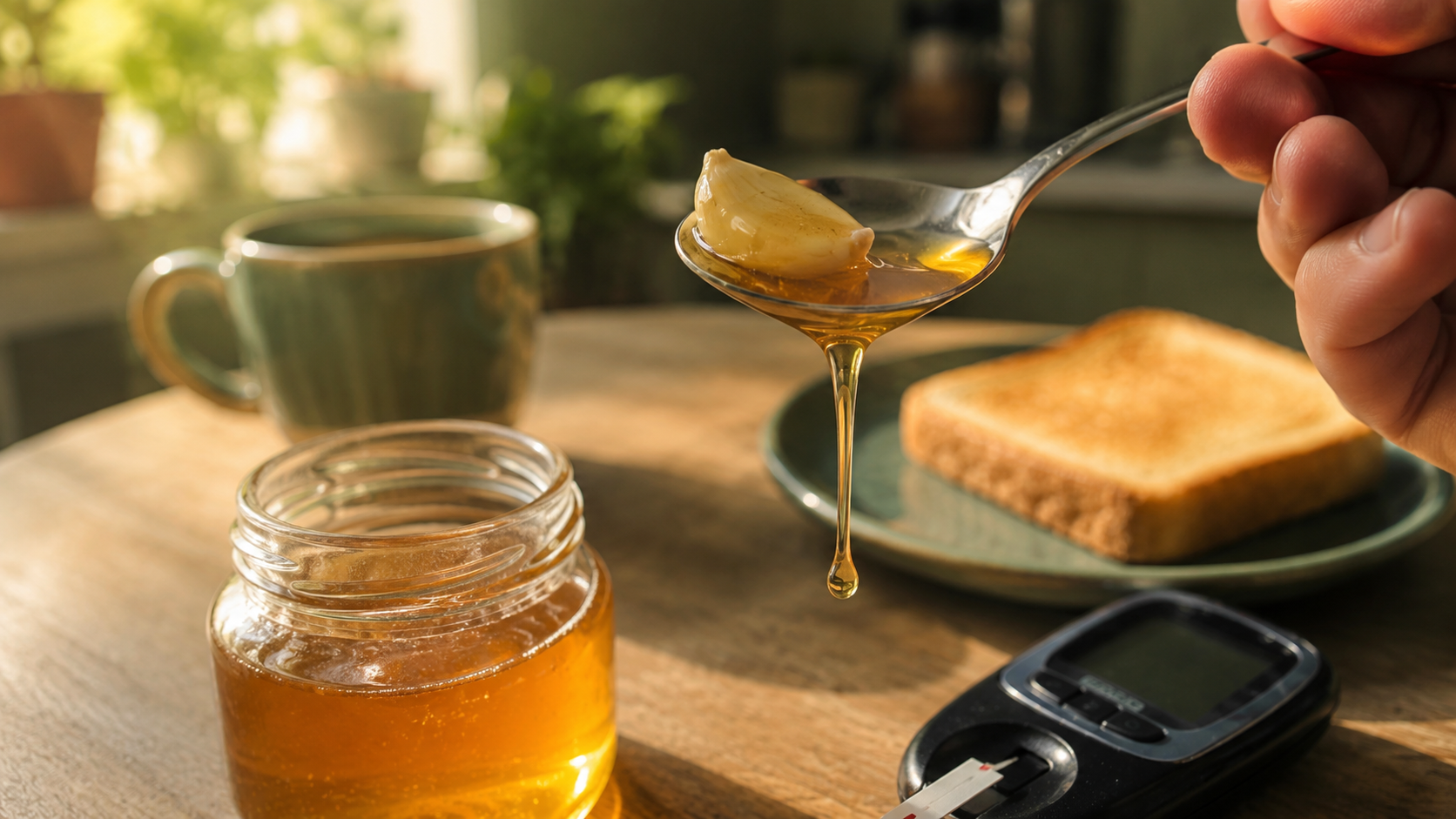
How people are actually making it
We collected the versions our readers sent us. They come in three flavors:
- The plain spoon. One tablespoon of extra virgin olive oil, straight, first thing in the morning.
- Olive oil and lemon. The same spoon with the juice of half a lemon, sometimes in a little warm water.
- Olive oil and cinnamon for diabetes. The spoon with a quarter teaspoon of cinnamon, often sold in the video as the version "named in Scripture."
None of these is dangerous for most people in those amounts, and we will say plainly what the honey recipe never earned: there is real research behind the olive oil part.
What the olive oil part gets right
In small controlled studies, meals made with extra virgin olive oil produced a gentler rise in blood sugar afterward than the same meals made with butter, corn oil or no added fat. Larger reviews of people with type 2 diabetes have found olive oil-rich eating patterns associated with modestly better A1c and fasting glucose than low-fat diets. It is a good fat, and swapping it in for butter is a change almost any doctor will sign off on.
Notice the words, though: with a meal. The effect shows up in the hour after you eat, because the fat slows how fast the sugar from that meal reaches the blood. A spoonful by itself on an empty stomach, an hour before breakfast, is not what those studies tested.
If you are going to make it anyway, make it the way the evidence points: use real extra virgin olive oil (it should taste peppery at the back of the throat), put it on your breakfast instead of before it, and if you add cinnamon, read our note on Ceylon versus cassia first, because the jar in most kitchens is the cassia kind, which is high in coumarin.
Joan's notebook
Joan is the kind of person who keeps a notebook, so she did. Four weeks of the honey recipe: her readings after breakfast went up, which is what you would expect from a spoonful of honey. Four weeks of the olive oil spoon: her after-breakfast readings were a bit softer, maybe 10 to 15 points on a good day. Her fasting number at 6:30 a.m., the one her doctor watches, did not budge in either month.

That is the step every one of these recipe videos leaves out. Olive oil can soften what a meal does. It cannot reach the reason the number is high before you have eaten anything. A fasting reading that keeps rising is not a breakfast problem. It is your body telling you something upstream is not clearing sugar the way it used to, all night long, with no food in the picture.
What sits upstream of the recipe
The person who finally answered Joan's question was not a cook. It was a friend from her Bible study, who had been through the same honey-then-oil cycle and then sat through a long presentation her nephew sent her. In it, a researcher argues that the trouble in a lot of long-time type 2 cases starts in the gut and reaches the pancreas, wearing down the cells that make insulin, and that this is why spoonfuls from the kitchen keep "almost" working. She has a name for it that made Joan laugh out loud before it made her think.
We will leave the name, and the reasoning, to her. What we can tell you is that it was the first explanation Joan had heard for why her fasting number ignored every recipe she tried.
Tried the recipe and the morning number didn't care?Hear what she says the kitchen spoon can't reach →When to stop experimenting and call the doctor
If your fasting readings are climbing over several weeks, if you are thirsty all the time, losing weight without trying, or seeing blurry vision, stop testing recipes and get an appointment. If you take insulin or a sulfonylurea, tell your doctor before adding any routine meant to affect blood sugar, kitchen or bottle.
What Joan does now
She still uses olive oil. It goes on her eggs now, not into a spoon. What changed is the habit at the end of that presentation: a small bottle of drops, morning and evening. The one she and her friend use is Glyco Barrier.
She did not order it on the spot. "After the honey, I wasn't about to fall for one more thing because a video said so." She read the label, looked up every ingredient, and asked her pharmacist about her metformin. What tipped her was that it was not another ingredient for breakfast. It was aimed at the part her notebook said the recipes kept missing.
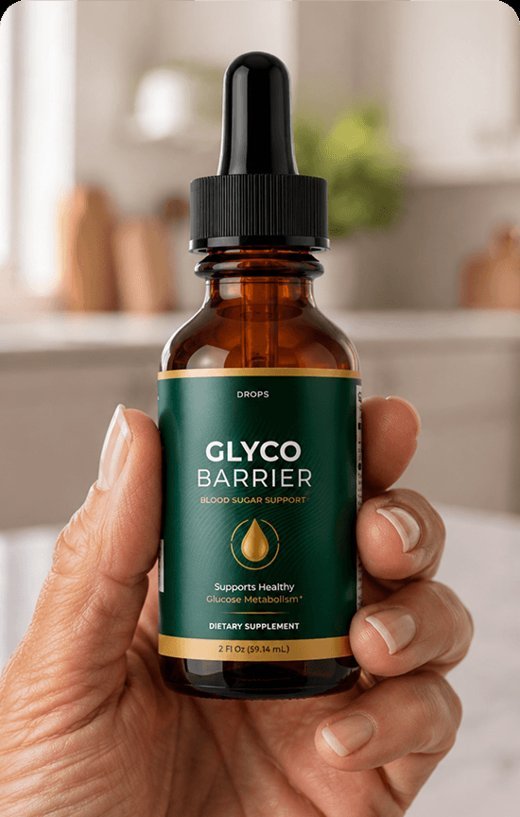
What is on the label, and why she cared
- Chromium picolinate. A mineral studied for how the body responds to insulin, which is the side of the problem a spoon of oil does not touch.
- Gymnema sylvestre leaf. A traditional herb for healthy glucose metabolism, and the one tied to the sugar cravings the honey recipe made worse.
- Green tea leaf. Antioxidants and gentle metabolic support.
- Coleus forskohlii root. Supports how the body uses stored fuel.
- Maca root. Traditionally used for steadier energy through the day.
Her notebook, the second time around
- Week 1. No change, and she wrote "here we go again" in the margin.
- Weeks 2 and 3. The afternoon pull toward something sweet eased off. That one surprised her most.
- Month 1. Her 6:30 a.m. readings started landing lower than the summer's average on most days. Not every day.
- Months 2 and 3. The stretch that decides an A1c, because the test reflects about three months of blood. She is on her second three-month supply and her next draw is in December.
Why the slow pace? A recipe changes one meal. A habit aimed at how your body clears sugar works on a different clock, and the company itself frames results around weeks of consistent use. Individual results vary.
It may suit you if you have type 2 or prediabetes, you have already tried the kitchen recipes, and your fasting number is the one that will not move. Skip it or ask your doctor first if you have type 1, you are on insulin or another glucose-lowering medicine, you are pregnant or nursing, or you have the warning signs above.
The order page shows a 60-day satisfaction promise from the date of purchase. After the honey summer, Joan said that was the only reason she was willing to try one more thing.
Before you buy another bottle of anythingWatch the presentation Joan's friend sent her → Sixty days, and your notebook gets the last wordSee the drops that replaced her morning spoon →P.S. Joan's first question to us was whether the oil recipe would disappoint her like the honey one. Her answer, two months later: the oil was fine, it just was never aimed at the right thing. If your morning number is ignoring your recipes too, start where she did.
Continue reading How to Lower Your A1c Naturally When Every Diet Has Stopped Working Why a careful diet stops working, and the place in the body no diet reaches.Sources and further reading
Violi F, et al. Extra virgin olive oil use is associated with improved post-prandial blood glucose and LDL cholesterol in healthy subjects. Nutrition & Diabetes, 2015.
Schwingshackl L, et al. Olive oil in the prevention and management of type 2 diabetes mellitus: a systematic review and meta-analysis. Nutrition & Diabetes, 2017.
U.S. Food and Drug Administration. Cinnamon products and coumarin: consumer information.