Blood Sugar · A1c
How to Lower A1c Fast? Darlene's Surgeon Gave Her Eight Weeks to Get Under 8. What Worked, What Backfired, and the Signal She Was Missing
Her knee replacement was on the calendar, and the surgeon wouldn't operate above 8. She tried to crash her number down. Here's what an A1c can and can't do in eight weeks, and the piece most fast fixes skip.
By the Blood Sugar Balance editorial desk · October 2026 · 7 min read
"How do I lower my A1c fast?" Darlene, 62, typed that into the search bar in the parking lot of an orthopedic office in Tulsa, and then typed it again with "in 8 weeks" on the end. Her surgeon had just told her that her knee replacement, the one she'd waited eleven months for, couldn't happen with an A1c of 8.6. "Get it under 8," he said, "and we'll put you back on the calendar." Then he handed her a sheet of paper and walked out.
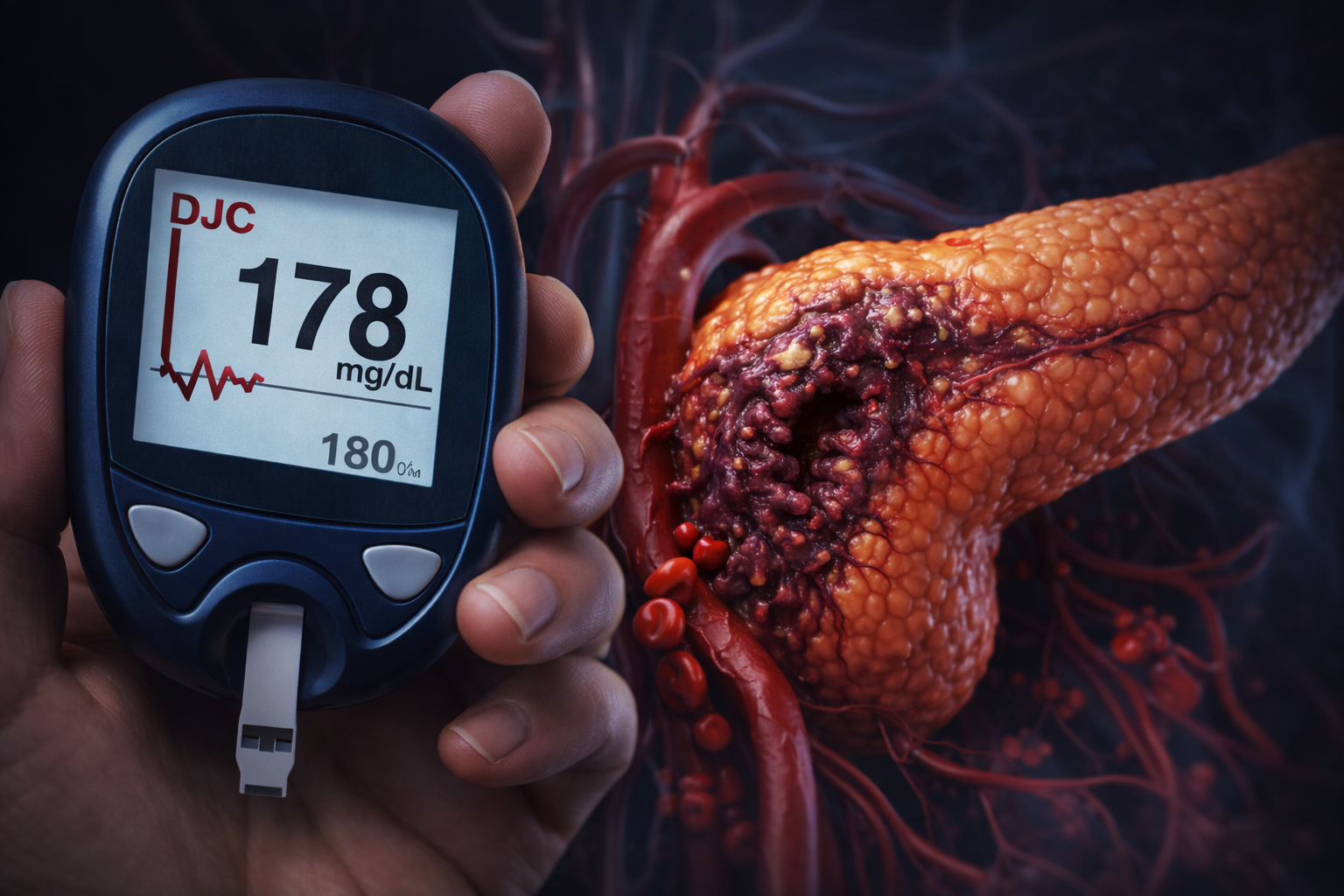
Darlene drove a city bus for twenty-six years. She is not a woman who takes no for an answer, and she does not like waiting. So she did what a lot of people do when they get a deadline: she went at the number like it owed her money. This is the story of her eight weeks, the parts that helped, the part that blew up on her, and the question she wishes she'd asked on day one.
The honest answer: what "fast" can mean for an A1c
Let's start with the math, because it's the thing nobody explains. Your A1c is a three-month average. It measures how much sugar has stuck to your red blood cells, and those cells live about three months. So no matter what you do, your A1c can't drop overnight. Your daily readings can change within days. The A1c follows over the next 8 to 12 weeks, and the most recent month counts the most.
That's actually good news for someone with a deadline. It means eight weeks of steadier days can show up on the next test. A drop of half a point to a full point in two to three months is realistic for a lot of people who make real changes, especially when they start high. Your doctor may also adjust your medicine, and that is often the fastest lever of all. Never skip that conversation.
The trap to watch: trying to lower A1c "fast" by eating almost nothing. Big swings, lows followed by rebounds, and the raging hunger that comes after a crash can leave the average stubbornly where it was, and lows are dangerous if you take insulin or certain pills.
What Darlene did in weeks one through three
She did everything at once. She cut bread, rice, potatoes, fruit and her beloved sweet tea. She skipped breakfast. She ate a salad at noon and a piece of chicken at six. She walked the parking lot of her apartment building twice a day. She bought a bottle of apple cider vinegar and drank a shot of it every morning, because a woman at church swore by it.
And for about ten days her morning readings came down. 178, then 152, then 141. She texted her daughter a picture of the meter with a row of exclamation points.
Then week three happened. The hunger came back like a freight train. At 3 in the afternoon she'd stand in front of the pantry with her hand on the door. At 9 at night she'd eat a sleeve of crackers standing up. She woke at 3 a.m. sweating, shaky, and checked her sugar: 68, then later that morning 190. "I was doing everything right and my body was fighting me," she told us. "It felt like a dog pulling at the leash all day long."
If you're doing everything right and the cravings keep winningHear what a physician says is behind the pull →The signal behind the 3 p.m. pull
Here's what was going on, and why "eat less" turned on her. Every time you eat, your gut sends a message to your pancreas: release insulin now, at the right time. The same message travels to your brain and says: you've had enough. That messenger has a name most people only know from the weekly-shot commercials: GLP-1. Your body makes its own.
When that natural signal is weak, two things happen together. The insulin you do make doesn't get used as well, so your numbers drift up even on a salad day. And the "I'm full" message gets quieter, so the hunger gets louder. Starve yourself on top of that and you turn the volume up even more. That's the freight train. It was never a willpower problem.

What she changed in weeks four through eight
Her nurse at the surgeon's office, a calm woman who'd seen a hundred Darlenes, sat her down and fixed the obvious things. Here is what actually moved the needle, and it's worth doing whether or not you ever read another word of this article:
- Three real meals. Protein and vegetables at each, a small portion of slow carbs, no skipping breakfast.
- A ten-minute walk after each meal, not twice a day at random. After-meal walking blunts the spike right when it happens.
- The medicine talk. Her doctor adjusted her dose. That alone is often worth more than anything on a food list.
- Sleep. No more 3 a.m. lows meant fewer 9 a.m. rebounds.
Her readings steadied. But the 3 p.m. pull was still there, quieter, and she knew from week three how quickly it could take over. That's when her sister sent her the video.
The presentation her sister sent
Her sister, a retired nurse's aide in Arkansas, sent a link with one line: "Watch this before you starve yourself again." It was a presentation by a physician who taught at one of the country's best-known medical schools and gave patients the same instructions for three decades: watch the sugar, take the medicine, walk after meals. Then someone he loved stopped responding to any of it.
He talks about what he went back into the research to find, something a routine checklist was never built to catch, that he believes quietly interferes with how the body uses its own insulin. He describes a short morning routine built around an oil, and he's very particular about which kind and how it fits into the morning. And he explains why it isn't the honey-and-cinnamon drink that's been going around online. We won't give his routine away here. It makes more sense in his own words.
Darlene's reaction: "Nobody ever told me the hunger and the number were the same problem."
You have a deadline and a meter that won't cooperateWatch the doctor's explanation Darlene watched →Before you change anything
Keep doing what your doctor told you, and tell them about your deadline so they can help you meet it safely. If you're on insulin or a pill that can cause lows, never cut calories hard or add anything new without asking first. If your readings are climbing fast, you're constantly thirsty, losing weight without trying, or your vision blurs, call your doctor now. And never stop or skip a prescribed medicine.
What sits next to her bus-driver thermos
At the end of that presentation is a bottle of drops made to support the body's own blood sugar balance between meals, the exact stretch where Darlene's 3 p.m. pull lived. The one on her counter is Glyco Barrier.
She didn't order that night. She printed the label and took it to her pharmacist, who checked it against her metformin and her blood pressure pill, said it wouldn't interfere, and told her to keep her doctor in the loop. She did. It sits next to the old thermos she carried on the bus for twenty-six years.

What she circled on the label
- Chromium picolinate. A mineral studied for how well the body responds to its own insulin.
- Gymnema sylvestre leaf. A traditional herb for healthy glucose metabolism, long associated with quieting the pull toward sweets. "The leash," she wrote next to it.
- Green tea leaf. Antioxidants and gentle metabolic support.
- Coleus forskohlii root. Supports how the body uses stored fuel.
- Maca root. Traditionally used for steadier energy through the afternoon.
How the weeks went
- Week 1. Drops morning and evening, the new meals, the walks. Nothing she could point to.
- Weeks 2 and 3. The 3 p.m. pantry stand-off got shorter. Some afternoons she forgot about it.
- Month 1. No 3 a.m. sweats in the last two weeks. Her morning readings stopped bouncing between 68 and 190.
- Months 2 and 3. The stretch an A1c can actually see. Her pre-op draw came back 7.7. Her knee is scheduled for the second week of November.
Was it the drops, the meals, the walks or the new dose? Darlene would tell you it was all of them working together, and she's right not to give any one thing the credit. Anything aimed at how your body handles sugar between meals needs weeks of steady use before a lab can see it, and the company frames results that way. Individual results vary.
It may suit you if you have type 2 or prediabetes, you're doing the work and the cravings or the number keep pushing back. Skip it or ask your doctor first if you have type 1, you're on insulin or another glucose-lowering medicine, or you're pregnant or nursing.
The order page shows a 60-day satisfaction promise from the date of purchase. Darlene's math: "Two months, same as my deadline. If the number didn't care, I'd get my money back. I've paid more than that for a knee brace."
Sixty days, the same window an A1c can seeSee the drops next to Darlene's thermos →P.S. Darlene still has the sheet the surgeon handed her. Under "A1c under 8" she's written in red pen: "7.7. And I'm not hungry at 3 o'clock anymore." If you're sitting in a parking lot with a deadline of your own, start with the presentation her sister sent.
Continue reading How Do You Reverse Diabetes? Harold Lost 24 Pounds and Got His A1c Under 7. Then It Started Creeping Back Another reader who did everything right, and the piece of the puzzle upstream of the scale.Sources and further reading
Nathan DM, et al. Translating the A1C assay into estimated average glucose values. Diabetes Care, 2008.
Reynolds AN, et al. Advice to walk after meals is more effective for lowering postprandial glycaemia in type 2 diabetes mellitus than advice that does not specify timing. Diabetologia, 2016.
Nauck MA, Meier JJ. Incretin hormones: their role in health and disease. Diabetes, Obesity and Metabolism, 2018.