Blood Sugar · How To · Type 2 & Prediabetes
How to Lower Blood Sugar When You're Already Doing Everything: Darlene Counted Every Carb for Two Years. Her Fasting Number Still Woke Up at 148
How to lower blood sugar with the steps that actually move it, why the morning number can climb while you sleep, and the overlooked signal a physician says decides whether your own insulin gets used at all.
By the Blood Sugar Balance editorial desk · October 2026 · 7 min read
Darlene, 61, was a bank teller in Wichita for twenty-four years. She balanced a drawer to the penny every night of her working life, and she runs her blood sugar the same way: a notebook on the kitchen counter, every meal, every reading, every carb, in pencil. When her doctor told her she had type 2, she typed how to lower blood sugar into her phone that same afternoon and did every single thing on the first page.
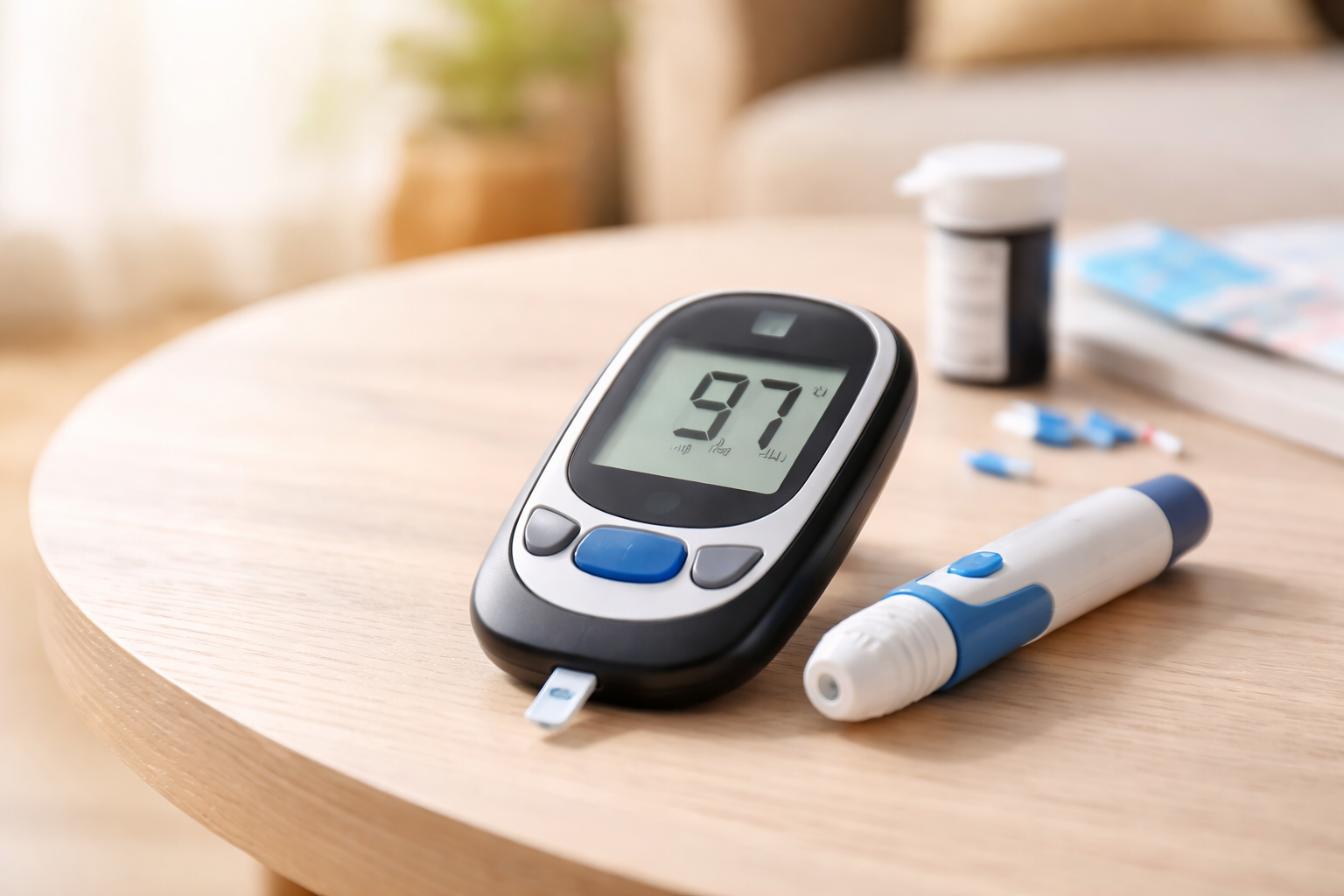
Two years later her notebook is a work of art. Her supper readings are mostly fine. Her after-lunch walks are religious. And almost every morning, before she's eaten a crumb, the meter says 140, 146, 148. "I balanced drawers for a living," she told her daughter. "This drawer won't balance, and I didn't put anything in it."
How to lower blood sugar: the steps that do help
Before anything else, these are the basics with real research behind them, and they're worth doing every day:
- Take your medication as prescribed, at the times your doctor set. Don't skip it on a "good" day.
- Walk 10 to 15 minutes after meals. Muscles pull sugar out of the blood while they work.
- Build the plate around protein, fiber and vegetables and keep refined carbs and sugary drinks small.
- Drink water. Dehydration concentrates sugar in the blood.
- Sleep seven hours if you can, and get stress some kind of outlet. Both raise the hormones that push sugar up.
If a reading is very high (over 300, or you feel confused, very thirsty, sick to your stomach, or short of breath), call your doctor or get care now. And if you take insulin or a medicine that can cause lows, check before you add anything new.
Why the morning number climbs while you sleep
Here's what Darlene's notebook couldn't show her. Every one of those steps works on the sugar that comes in with a meal. But between about three and seven in the morning, your liver releases stored sugar to get you ready to wake up. In a body that answers its own insulin well, that sugar gets used. In a body that's stopped listening, it just sits in the blood. That's why so many careful people see good supper readings and a stubborn fasting number. Nothing they ate caused it.
"Doing everything right" can help, but… if your body has gotten worse at using the insulin it makes, the plate is only half the story.
Counting every carb and the morning number still won't come down?See the overlooked factor a physician explains in his presentation →The signal behind the cravings and the morning number
Darlene had one more clue she'd never connected. The 3 p.m. pull toward something sweet. The 9 p.m. standoff with the pantry, even after a full supper, like her body never got the message that she'd eaten.
There's a reason those two things travel together. The message that says "you're full" and the message that tells your body to use its insulin now ride on the same natural signal. When that signal fades, the cravings get louder and the number drifts up, no matter how good the notebook looks. A physician with three decades in practice built a short morning routine around supporting that signal after his own wife's numbers kept climbing despite doing everything she was told.
What goes into his morning routine, why one ingredient in it is mentioned more than thirty times in Scripture, which kind he uses (not the bottle most people have in the pantry), and how early in the day it has to happen, is the part he walks through in his presentation. It isn't the honey-and-cinnamon thing from the internet. Darlene had tried that. Twice.
The 3 p.m. cravings and the 148 at dawn have the same rootWatch the morning routine Darlene's sister sent her →What's next to Darlene's notebook now
Her sister Joan, a retired nurse in Tulsa, sent her the presentation in September with a one-line text: "Watch all of it before you argue with me." Darlene watched it twice, the second time with her notebook open. At the end the physician talks about a supplement made to support the body's own blood sugar balance through the whole day, overnight included. It's called Glyco Barrier. Darlene read the label the way she used to read a signature card:
- Chromium picolinate. A mineral studied for how well the body responds to its own insulin. "That's the overnight part," Joan told her.
- Gymnema sylvestre leaf. A traditional herb for healthy glucose metabolism and for quieting the pull toward something sweet.
- Green tea leaf. Antioxidants and gentle metabolic support.
- Coleus forskohlii root. Supports how the body uses stored fuel.
- Maca root. Traditionally used for steadier energy through the afternoon.

She asked her doctor first, because of her metformin, and he told her to keep her prescription and her walks and to check her readings more often in the first few weeks.
Weeks 1 and 2: nothing she'd write down as a trend. Weeks 3 to 6: the fasting column in the notebook started showing numbers in the 120s, then a 112 she circled twice. Month 2: the 9 p.m. pantry trips mostly stopped. Her recheck is in January, after the holidays, and she's going in with the notebook. Results vary from person to person, and some people will still need more help from their doctor. That isn't failure.
It may suit you if you have prediabetes or type 2, you've already changed how you eat, and your fasting number or your A1c has stalled. Skip it or ask your doctor first if you have type 1, take insulin or another glucose-lowering medicine, have kidney or liver problems, or are pregnant or nursing. The order page shows a 60-day satisfaction promise from the date of purchase.
Before the holiday desserts start counting toward JanuarySee the routine before you write another 148 in the notebook →P.S. Darlene still keeps the notebook, in pencil, every day. She says the only thing that changed is she's stopped erasing the morning column. If your own first reading of the day keeps coming up higher than your bedtime one, watch what Joan sent her, and bring your questions to your doctor.
Continue reading Home Remedies for Type 2 Diabetes: Harold's Counter Full of Remedies Which ones have something behind them, and where they stall.Sources and further reading
American Diabetes Association. Standards of Care in Diabetes, 2026: glycemic goals; lifestyle and physical activity; hyperglycemia.
CDC. Managing blood sugar (accessed October 2026).