Blood Sugar · A1c · Type 2 & Prediabetes
How to Lower My A1c Before the Holidays? Marlene Has 90 Days Until Her January Test. The Candy Bowl Is Already on the Counter
How to lower your A1c in the next three months, why the number your doctor sees in January is being written right now, and the overlooked morning signal a physician says most careful people never think about.
By the Blood Sugar Balance editorial desk · October 2026 · 7 min read
Marlene, 64, directed the choir at her Lutheran church in Omaha for nineteen years. She knows what three months of practice sounds like, and she knows what three months of skipping practice sounds like on Christmas Eve. So when her doctor looked at her A1c in October, said "7.4, let's recheck in January," and slid the lab sheet across the desk, she did the arithmetic on the drive home. Halloween. Thanksgiving. Her sister's cookie exchange. Christmas. Then the test.
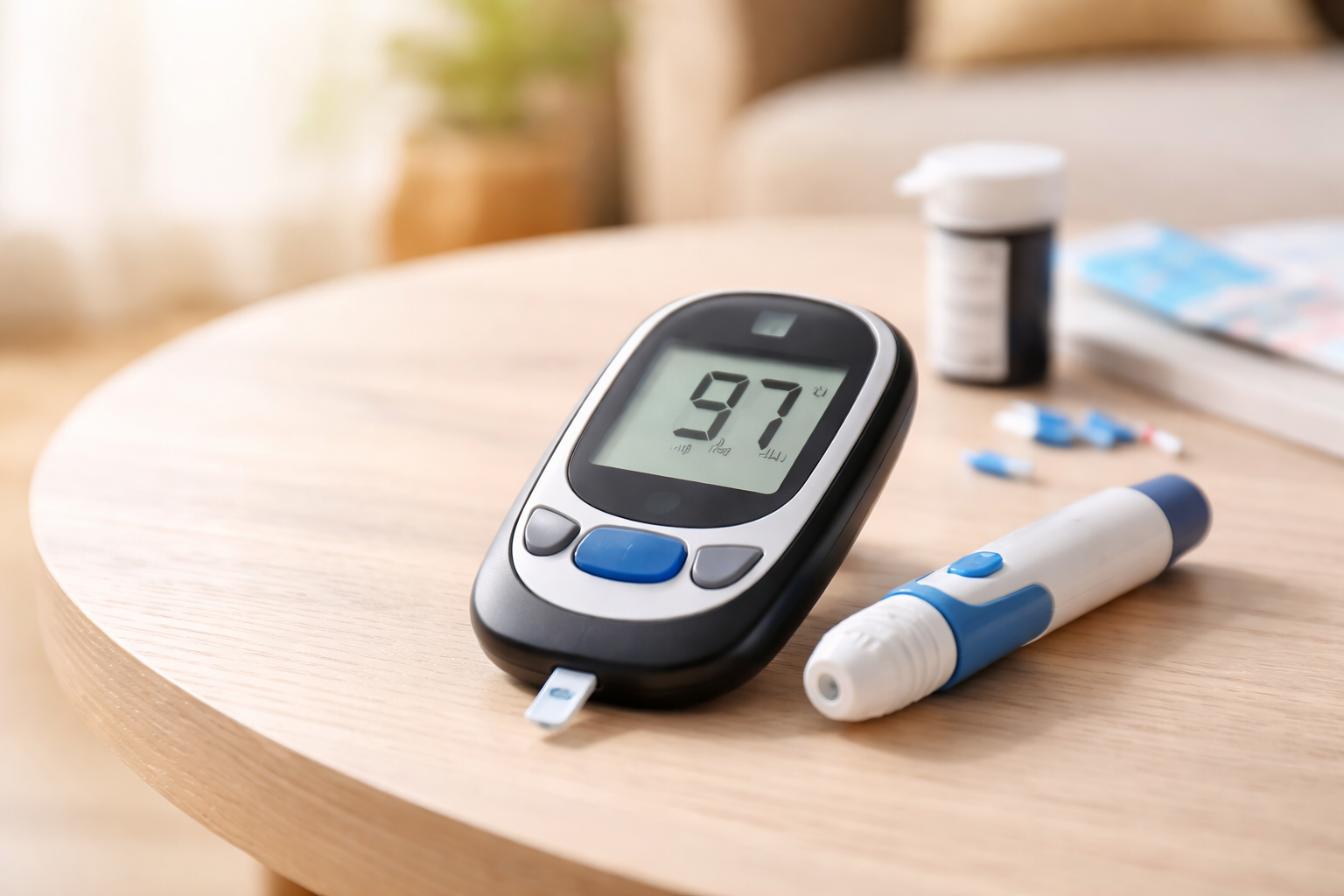
That night, with the candy bowl already sitting on the counter, she typed how to lower my a1c into her phone. "I have ninety days and four holidays," she told her daughter. "Tell me how that math works."
How to lower my A1c: what actually moves it
Your A1c is roughly a three-month average of your blood sugar. That's the good news hiding in Marlene's math: the number your doctor sees in January is being written from now through the holidays, one ordinary day at a time. The basics with real research behind them:
- Take your medication exactly as prescribed, including through the holidays and the travel days.
- Walk 10 to 15 minutes after your biggest meal. Working muscles pull sugar out of the blood without needing extra insulin.
- Eat the protein and vegetables first, then the starch. The order alone can soften the spike.
- Pick your treats on purpose. One you love on the actual holiday beats a fun-size bar every afternoon for three weeks.
- Protect your sleep. Short nights raise the hormones that push sugar up the next morning.
If a reading is very high (over 300, or you feel confused, very thirsty, sick to your stomach or short of breath), call your doctor or get care now. If you take insulin or a medicine that can cause lows, check with your doctor before adding anything new.
The part of the average you're not eating
Here's what Marlene hadn't counted. A big piece of an A1c isn't the candy at all. It's the hours when you're not eating anything: overnight and first thing in the morning. Between about three and seven a.m., your liver releases stored sugar to get you up and moving. If your body still answers its own insulin well, that sugar gets used. If it's stopped listening, it sits in your blood every single morning, ninety mornings in a row, and quietly raises the average no matter how good the holiday plate was.
Skipping the candy bowl can help, but… if your body has gotten worse at using the insulin it already makes, the fasting hours keep adding to the number while you sleep.
Ninety days until your next A1c and the mornings keep running high?See the overlooked factor a physician explains in his presentation →Why the cravings get louder this time of year
Marlene had a second clue. Every October, like clockwork, the afternoon pull toward something sweet gets stronger. She'd always blamed the candy bowl for being there. But she'd eat a real lunch, and by three o'clock her hand was in the bowl anyway, like her body never got the message that she'd eaten.
There's a reason. The message that tells you "you're full" and the message that tells your body to use its insulin now ride on the same natural signal. When that signal weakens, the cravings and the morning number climb together. A physician with three decades in practice built a short morning routine around supporting that signal, after watching his own wife's numbers climb while she did everything she was told.

What goes into his routine, which everyday kitchen ingredient in it is mentioned in Scripture over and over, why the kind most people have in the pantry isn't the one he uses, and how early in the morning it has to happen, is what he walks through in his presentation. It isn't "skip dessert." Marlene had tried that every December for six years.
The 3 p.m. hand in the candy bowl and the high morning number have one rootWatch the morning routine Marlene's choir friend sent her →What's next to the candy bowl now
Her friend Ruth, an alto in the choir for thirty years, sent her the presentation the Sunday after the A1c appointment with a note: "Watch all of it before rehearsal Wednesday." Marlene watched it with the lab sheet in her lap. At the end the physician talks about a supplement made to support the body's own blood sugar balance through the whole day, overnight included. It's called Glyco Barrier. Marlene read the label the way she reads a new score, every line:
- Chromium picolinate. A mineral studied for how well the body responds to its own insulin. "That's the part for the mornings," Ruth told her.
- Gymnema sylvestre leaf. A traditional herb for healthy glucose metabolism and for quieting the pull toward something sweet. Marlene looked at the candy bowl when she read that line.
- Green tea leaf. Antioxidants and gentle metabolic support.
- Coleus forskohlii root. Supports how the body uses stored fuel.
- Maca root. Traditionally used for steadier energy through the afternoon.

She asked her doctor first, because of her metformin. He told her to keep her prescription and her after-supper walks and to check her readings more often for the first few weeks.
Weeks 1 and 2: nothing she'd stand up and announce. Weeks 3 to 6: her fasting readings started landing in the 120s instead of the 150s, and the three o'clock trip to the bowl got easier to skip. Month 2 and 3: that's Thanksgiving and Christmas, and she's going into both with a plan instead of a promise. Her test is the second week of January. Results vary from person to person, and some people will still need more help from their doctor. That isn't failure.
It may suit you if you have prediabetes or type 2, you've already changed how you eat, and your A1c has stalled or crept up. Skip it or ask your doctor first if you have type 1, take insulin or another glucose-lowering medicine, have kidney or liver problems, or are pregnant or nursing. The order page shows a 60-day satisfaction promise from the date of purchase.
Your January number is being written this weekSee the routine before the first holiday plate →P.S. The candy bowl is still full. For the first year she can remember, Marlene plans to hand out every last bar at the door Saturday night instead of "testing" them all week. She says it isn't willpower; she just isn't pulled toward the closet the way she was last October. If your own lab sheet says "recheck in January" and the bowl is already on your counter, watch what Ruth sent her, and take your questions to your doctor.
Continue reading How to Lower Blood Sugar When You're Already Doing Everything Why the morning number climbs while you sleep.Sources and further reading
American Diabetes Association. Standards of Care in Diabetes, 2026: glycemic goals; A1c testing; lifestyle and physical activity.
CDC. All About Your A1C (accessed October 2026).