Blood Sugar · Prediabetes
How to Reverse Prediabetes Naturally? Gail's Doctor Said "You're Borderline, Come Back in Six Months." Here's What She Did With Those Six Months
An A1c of 6.1, a pamphlet about walking, and a recheck in April. Gail didn't want to spend half a year waiting to find out if she'd crossed the line. What prediabetes really is, what usually moves it, and the piece the pamphlet left out.
By the Blood Sugar Balance editorial desk · October 2026 · 7 min read
The appointment lasted eleven minutes. Gail, 58, a school bus dispatcher in Dayton, Ohio, went in for a routine physical and came out with a number she'd never heard of: an A1c of 6.1. "You're borderline," her doctor said, already typing. "Watch the sweets, walk a little more, and we'll recheck in six months." Then he handed her a pamphlet. In the parking lot she typed the question into her phone that thousands of people type every week: how to reverse prediabetes naturally. Then she sat there, engine off, reading, for forty minutes.
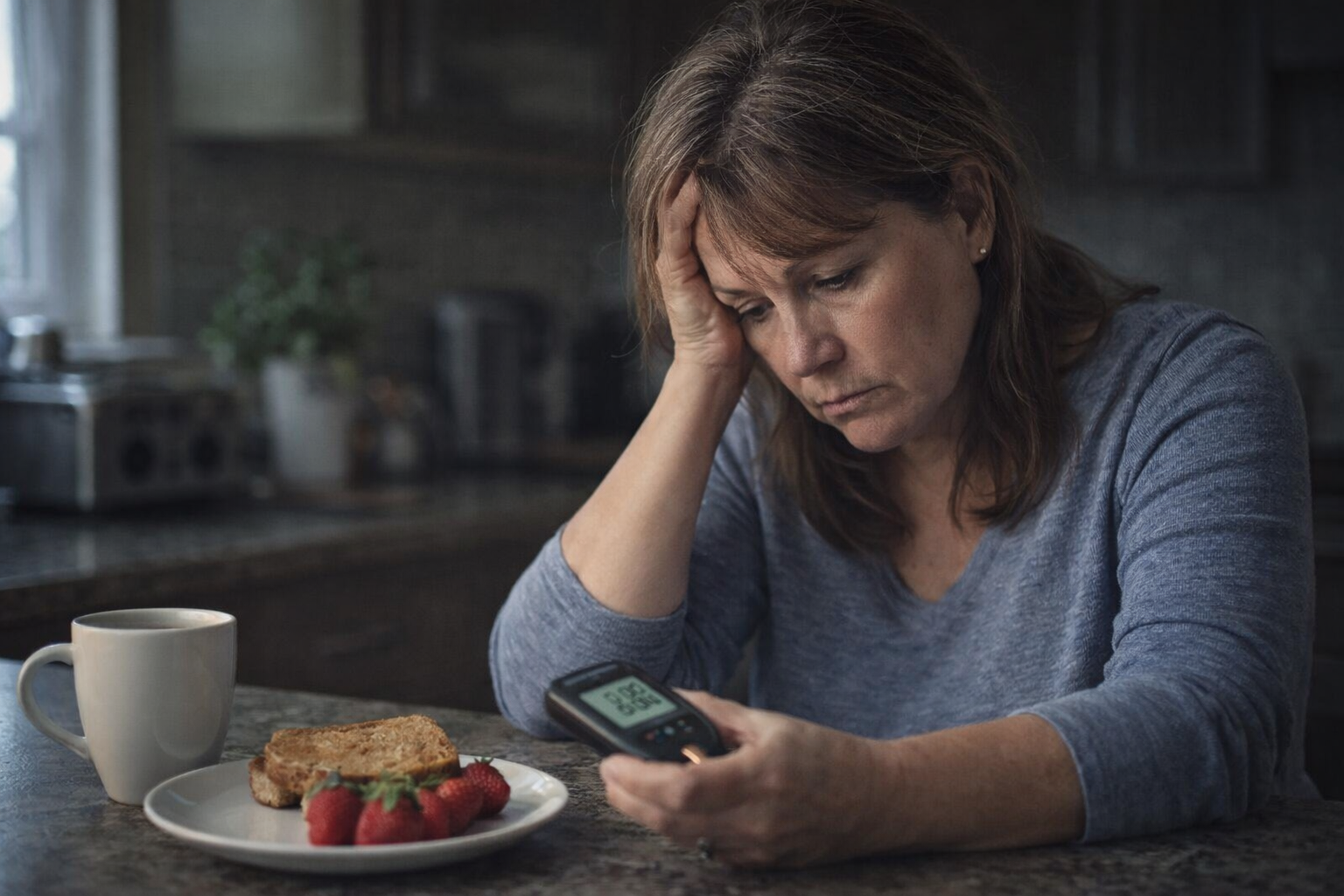
"Borderline is a strange word," she told us. "It sounds like nothing's wrong yet. But my mother lost two toes to diabetes, and she was 'borderline' once too. Nobody did anything with her six months either."
If someone just told you you're prediabetic and to come back later, this is for you. Not to scare you. Because the six months in between are the most useful six months you'll get, and most people spend them waiting.
What "prediabetes" really means
An A1c between 5.7 and 6.4 means your blood sugar has been running higher than normal, but not high enough to be called type 2. It's not a diagnosis of failure. It's a warning light. A clinical review published this August put it plainly: prediabetes is an opportunity for prevention, not an inevitable destiny. The same review made a point that stuck with us: telling someone "diet and exercise" with no goal, no follow-up and no support is not a prevention program. It's a pamphlet.
The good news is real. In the large prevention trials, people who lost about 7% of their weight and walked around 150 minutes a week cut their risk of developing type 2 by more than half. And people who get their numbers back to the normal range, not just "a bit better," tend to stay protected longer.
What Gail tried first, and why it stalled
- No more sweets. She cleared the cookie jar the first night. Her morning readings went from the 120s to the 110s. Then they parked there.
- Walking at lunch. Twenty minutes around the bus yard every day. It helped her after-lunch number. It didn't touch the morning one.
- A low-carb week. She lost four pounds, then was so hungry by Friday night that she ate a sleeve of crackers standing at the counter. "That's when I knew willpower was not the plan."
- A drugstore "blood sugar support" capsule. Thirty days, nothing she could measure.
None of it was wrong. Cutting sweets and walking can absolutely work, and for some people it's enough. But Gail noticed the same pattern we see in so many reader letters: the obvious changes move the number a little, and then it stops, and the hunger fights back.
The part most prediabetes advice skips
Here's what made Gail's six months different. Researchers following people with prediabetes found something curious: some of them got their blood sugar back to normal without losing weight. When scientists looked at what those people had in common, one thing stood out. Their bodies responded better to GLP-1, the "I've eaten, release insulin, you're full now" messenger your gut sends after every meal.
You know the name from the weekly-shot commercials. But your body has made its own version all your life. When that natural signal is strong, insulin shows up on time and the cravings stay quiet. When it fades, which is often what's happening in prediabetes, you can cut sweets and walk every day and still feel the number, and the pantry, pushing back. That was Gail's Friday-night cracker sleeve exactly.
So the question isn't only "how do I eat less sugar." It's "why has my body stopped answering its own signal, and can that be supported?" That's the question her doctor's pamphlet never asked.
Borderline is the best time to askHear a physician explain the signal behind prediabetes →The text from her sister-in-law
Gail's sister-in-law Bev, 64, has had type 2 for nine years. When Gail mentioned the "come back in six months," Bev went quiet, then sent her a link with one line: "Watch this before you lose half a year."
It was a presentation from a physician who spent three decades at a well-known medical school giving patients the same advice Gail got in her pamphlet. Then someone close to him kept getting worse no matter how closely they followed it. He went looking for the reason, and he talks about a factor he believes the usual checklist simply doesn't look for, one that interferes with how the body uses its own insulin long before the word "diabetes" shows up on a chart.
Part of what he describes is a short morning routine built around a particular oil. He is specific about the kind and about when it goes in, and he takes time to explain why it isn't the honey-and-cinnamon trick going around social media. We're not going to summarize it here; it's a few minutes of explanation that loses something every time someone retells it.
Gail watched it on her break, in the dispatch office, with the radio turned down. "It was the first time anybody explained why the obvious stuff stops working. Nobody had told me prediabetes was something you could still do something about, not just watch."
Six months is a long time to wait and seeWatch the explanation Bev sent Gail →Before you change anything
Prediabetes is the time to act, not to panic. Keep walking. Keep the sweets low. Get your A1c rechecked when your doctor says, and don't skip it. If you already take metformin or any other medicine, don't add anything new without asking your doctor or pharmacist. And if you're suddenly very thirsty, losing weight without trying or your vision blurs, call your doctor now.
What's on Gail's kitchen windowsill now
At the end of that presentation the physician talks about a supplement made to support the body's own blood sugar balance between meals, the stretch where Gail's morning numbers stalled and the Friday-night hunger lived. The one on her windowsill is Glyco Barrier.
She was suspicious. She'd already wasted thirty days on the drugstore capsules. So she read the whole label in the parking lot of her pharmacy before she ordered, and asked the pharmacist what he thought. He said nothing on it looked like a problem for someone not on medication and to mention it at her recheck.
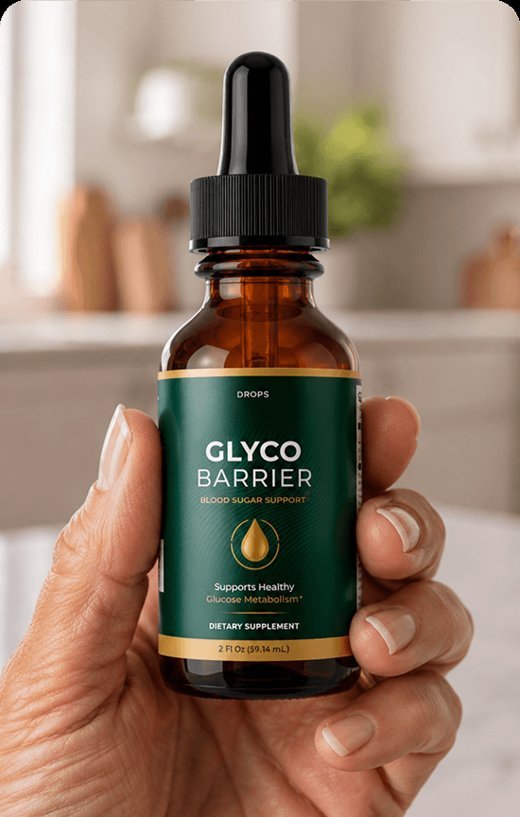
What she circled on the label
- Chromium picolinate. A mineral studied for how well the body responds to its own insulin. She wrote "the part the pamphlet skipped" next to it.
- Gymnema sylvestre leaf. A traditional herb for healthy glucose metabolism, long linked to quieting the pull toward sweets. "Friday nights," she wrote.
- Green tea leaf. Antioxidants and gentle metabolic support.
- Coleus forskohlii root. Supports how the body uses stored fuel.
- Maca root. Traditionally used for steadier energy, which mattered to someone running buses from 5 a.m.
Her six months, month by month
- Weeks 1 and 2. Same walks, same no-sweets rule, drops morning and evening. The Friday-night pull was a little softer. She didn't trust it yet.
- Weeks 3 to 6. Her morning readings slipped out of the 110s for the first time, mostly 102 to 106.
- Months 2 and 3. Down six pounds without the white-knuckle feeling of her low-carb week. A few mornings in the high 90s.
- Month 6. Her recheck came back 5.6. Her doctor looked up from the screen and said, "Well, whatever you're doing, keep doing it."
Was it the drops, the walks, the cookie jar, or all of it? Gail gives the credit to all of it, and she's right to. Anything aimed at how the body handles sugar between meals takes weeks of steady use before a lab can see it, which is exactly why the six months matter. Individual results vary, and some people with prediabetes will still need medication. That's not failure either.
It may suit you if you've been told you're prediabetic or borderline, you're making the obvious changes, and the number or the cravings keep pushing back. Skip it or ask your doctor first if you have type 1, take insulin or another glucose-lowering medicine, or you're pregnant or nursing.
The order page shows a 60-day satisfaction promise from the date of purchase. Gail's reasoning: "My doctor gave me six months to wait. I gave myself sixty days to try."
Don't spend the six months waitingSee what's on Gail's windowsill →P.S. Gail kept the drugstore meter in her purse. The morning after her recheck she tested out of habit in the same parking lot where she'd first typed the question into her phone. 94. She sent the picture to Bev with one word: "Borderline." If you just got your own "come back in six months," start with the presentation Bev sent.
Continue reading Diabetic Diet, but Your A1c Is Still High? Charlene Followed the Plate Method for a Year What a diabetic diet changes, and the signal food alone may not reach.Sources and further reading
Palencia Diaz R, Palencia Vizcarra R, Carrillo Esper R. Prediabetes 2026: from the glycemic threshold to precision prevention. Academia Nacional de Medicina de Mexico, August 26, 2026.
American Diabetes Association. Prevention or Delay of Diabetes and Associated Comorbidities. Standards of Care in Diabetes, 2026.
Diabetes Prevention Program Research Group. Reduction in the incidence of type 2 diabetes with lifestyle intervention or metformin. New England Journal of Medicine, 2002.
Sandforth A, et al. Prevention of type 2 diabetes through prediabetes remission without weight loss. Nature Medicine, 2025.