Blood Sugar · Type 2 · Mornings
A Morning Routine to Lower A1c? Ruth Built the Perfect One: Eggs, Cinnamon Coffee, a Walk Before 8. Her A1c Sat at 7.4 for a Year. Here's the Piece Her Mornings Were Missing
What a good morning routine for A1c really can and can't do, why the hours you never see decide the number, and the short kitchen ritual a physician describes that Ruth had never heard of.
By the Blood Sugar Balance editorial desk · October 2026 · 7 min read
Ruth, 63, a retired bank teller in Dayton, Ohio, does not do anything halfway. When her doctor told her last fall that her A1c was 7.4, she went home and built what she called "the perfect morning routine to lower A1c." Up at 6:15. A glass of water before anything else. Two eggs and spinach, no toast. Coffee with a shake of cinnamon. A twenty-minute walk around the block before 8. Metformin with breakfast, never late.
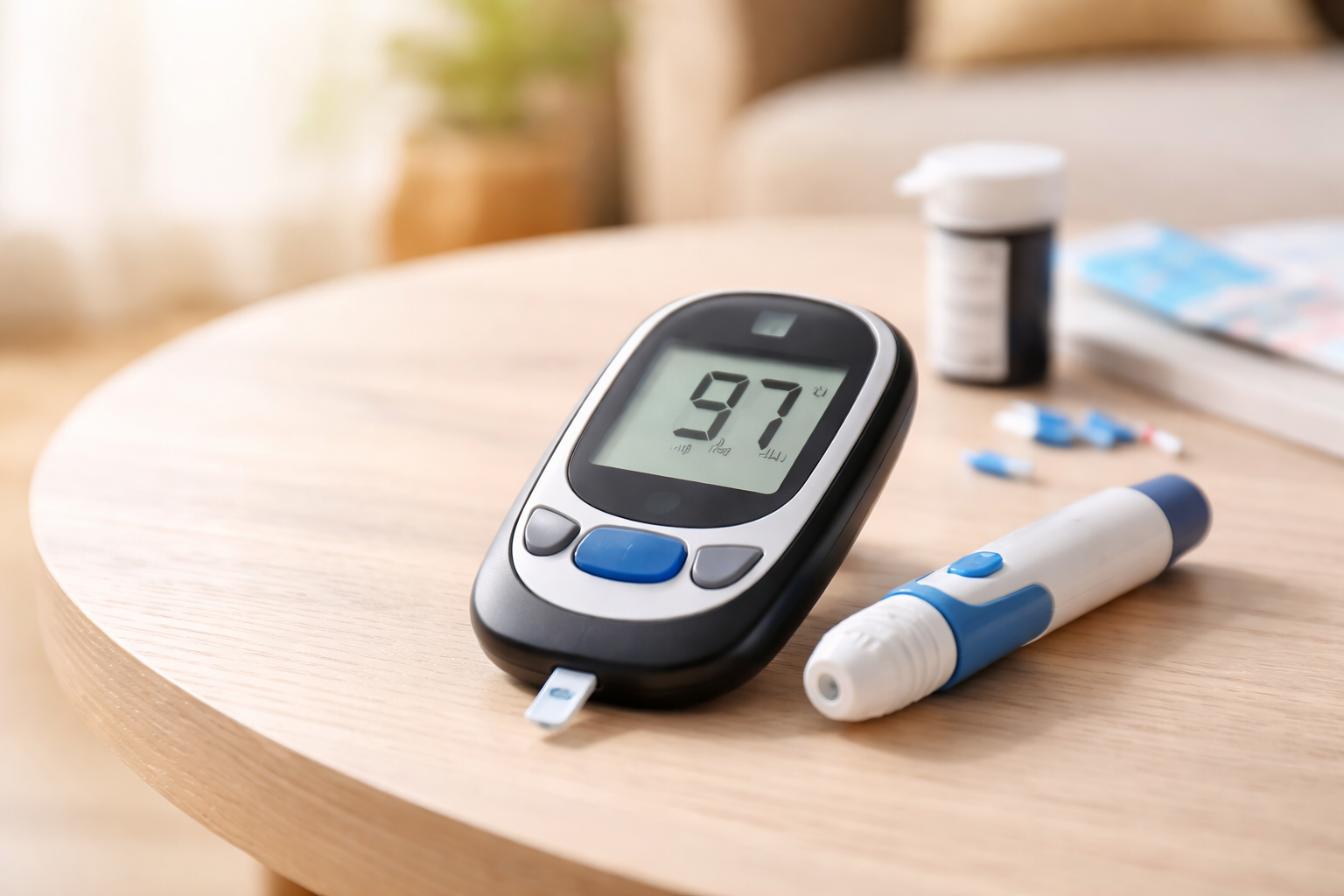
She did it every single day for a year. In September she went back for her recheck. 7.4. Not 7.3. Not 7.2. The exact same number, like she'd done nothing at all.
"I sat in the car in the clinic parking lot," she told her daughter that night, "and I thought, what else is there? I've done the morning. I've done it perfectly."
If you've built your own careful mornings and your A1c won't move, this is for you. Because Ruth's routine was good. It just wasn't reaching the part of the day that was setting the number.
What a morning routine can do for your A1c
Mornings matter more than most people realize. A lot of people with type 2 wake up already high, because the body releases sugar in the early hours to get you going (doctors call it the dawn effect), and what you do in the first hour can either pile on top of that or soften it. That's why researchers keep studying breakfast: a University of Michigan team posted a study this September testing a very low-carb breakfast for adults with type 2 whose sugar stays high.
- Protein and vegetables first. Eating them before any bread or fruit tends to blunt the rise after breakfast.
- A short walk after you eat. Working muscles pull sugar out of the blood without needing insulin. Ten minutes counts.
- Medication on time. Exactly as prescribed, never doubled to "make up" for a bad day.
- The same wake-up time. Steady sleep helps the hormones that run the dawn rise.
Ruth was doing all four. So why didn't her A1c budge?
Why a perfect morning can leave the number stuck
Here's what nobody had told her. Your A1c is a three-month average of every hour, not just the ones you're watching. Ruth's routine covered about two hours a day. Her meter covered the moment before her walk. But the 3 a.m. rise, the slow creep through the afternoon, the evening hours after supper, those are most of the day, and they were quietly setting her number while her mornings looked perfect.
And there's something under that, too. Some people's bodies stop responding to their own insulin the way they used to, even when they're eating well and taking the pills. The food is right. The effort is right. Something in how the body handles sugar between meals isn't keeping up.
Your morning covers two hours a dayHear a physician explain what's happening in the other twenty-two →The video her daughter sent
Ruth's daughter Megan, a nurse in Cincinnati, didn't send her a diet. She sent her a link with one line: "Mom, watch this before you add a single thing to your mornings."
It was a presentation from a physician who spent decades in practice and taught the standard advice to patients for years, until someone in his own family followed every instruction and the numbers still climbed. In it, he describes an overlooked factor in how the body uses insulin, one he says routine checkups aren't built to catch, and a short home ritual he now does in the morning, built around olive oil and a couple of ordinary kitchen ingredients.
Ruth had olive oil in her pantry. She had cinnamon in her coffee. And according to him, that's exactly the problem: the kind most people buy, and the way most people use it, isn't what he's talking about. Which oil, what goes with it, and the timing are the whole point, and he explains why the cinnamon-and-honey version that circulates online is something different. We won't spoil it here. He tells it better, and Ruth said the "why" was the first thing in a year that made her feel she wasn't failing.
Before you change anything
Keep your medicine, your appointments and your good mornings. If you take insulin or a pill that can cause lows, talk to your doctor before adding anything that lowers blood sugar, and check more often for the first few weeks.
What's next to Ruth's meter now
At the end of the presentation, the physician talks about a supplement made to support the body's own blood sugar balance through the whole day, including the hours a morning routine never touches. The bottle on the side table next to Ruth's meter is Glyco Barrier.
Ruth counted other people's money for thirty-one years, so she read the label twice, then called her pharmacist and read it to him line by line. He said nothing on it looked like a problem with her metformin, and to keep checking and mention it at her next visit.

What she circled on the label
- Chromium picolinate. A mineral studied for how well the body responds to its own insulin. "That's the piece my eggs weren't reaching," she said.
- Gymnema sylvestre leaf. A traditional herb for healthy glucose metabolism, long linked to quieting the pull toward sweets, which for Ruth hit at 3 p.m. like a clock.
- Green tea leaf. Antioxidants and gentle metabolic support.
- Coleus forskohlii root. Supports how the body uses stored fuel.
- Maca root. Traditionally used for steadier energy through the afternoon.
What she noticed, and when
- Weeks 1 and 2. Same routine, same metformin, drops morning and evening. Nothing she'd swear to, except the 3 p.m. trip to the candy dish got easier to skip.
- Weeks 3 to 6. Her morning readings, stuck in the 140s for a year, started showing up in the 120s on most days.
- Month 2. She started checking once after supper, too, and saw the evening numbers she'd never looked at come down with them.
- Month 3. Her recheck is in December. She's already put it on the calendar in red.
Why does it take that long? Because the A1c is built from three months of blood. Anything aimed at how the body handles sugar between meals needs weeks before the lab can see it. Individual results vary, and some people will still need more help from their doctor. That isn't failure.
It may suit you if you have type 2 or prediabetes, your mornings are already disciplined, and the number keeps sitting still anyway. Skip it or ask your doctor first if you have type 1, take insulin or another glucose-lowering medicine, or you're pregnant or nursing.
The order page shows a 60-day satisfaction promise from the date of purchase. Ruth's reasoning: "I gave the perfect morning a whole year. I can give the other twenty-two hours sixty days."
Your mornings are already rightSee what's next to Ruth's meter →P.S. Ruth still gets up at 6:15. Still eats the eggs, still walks the block before 8. She just stopped expecting two good hours to fix a twenty-four-hour number. If you're sitting in your own car in a clinic parking lot looking at the same A1c as last time, watch what Megan sent her tonight.
Continue reading What's the Fastest Way to Lower Blood Sugar? Dennis Saw 263 After Sunday Pancakes What brings a high reading down in an hour, and why it never moved his A1c.Sources and further reading
ClinicalTrials.gov. The Breakfast Study, NCT05986097 (University of Michigan), record updated September 2026.
American Diabetes Association. Standards of Care in Diabetes, 2026.