Blood Sugar · Type 2
What's the Fastest Way to Lower Blood Sugar? Dennis Saw 263 After Sunday Pancakes and Spent the Afternoon Trying Everything. Here's What Worked, and What Didn't Last
A family breakfast, a number he'd never seen before, and a search bar. What actually brings a high reading down in the next hour, when it's an emergency, and why the fast fixes never touched the number his doctor cares about.
By the Blood Sugar Balance editorial desk · October 2026 · 7 min read
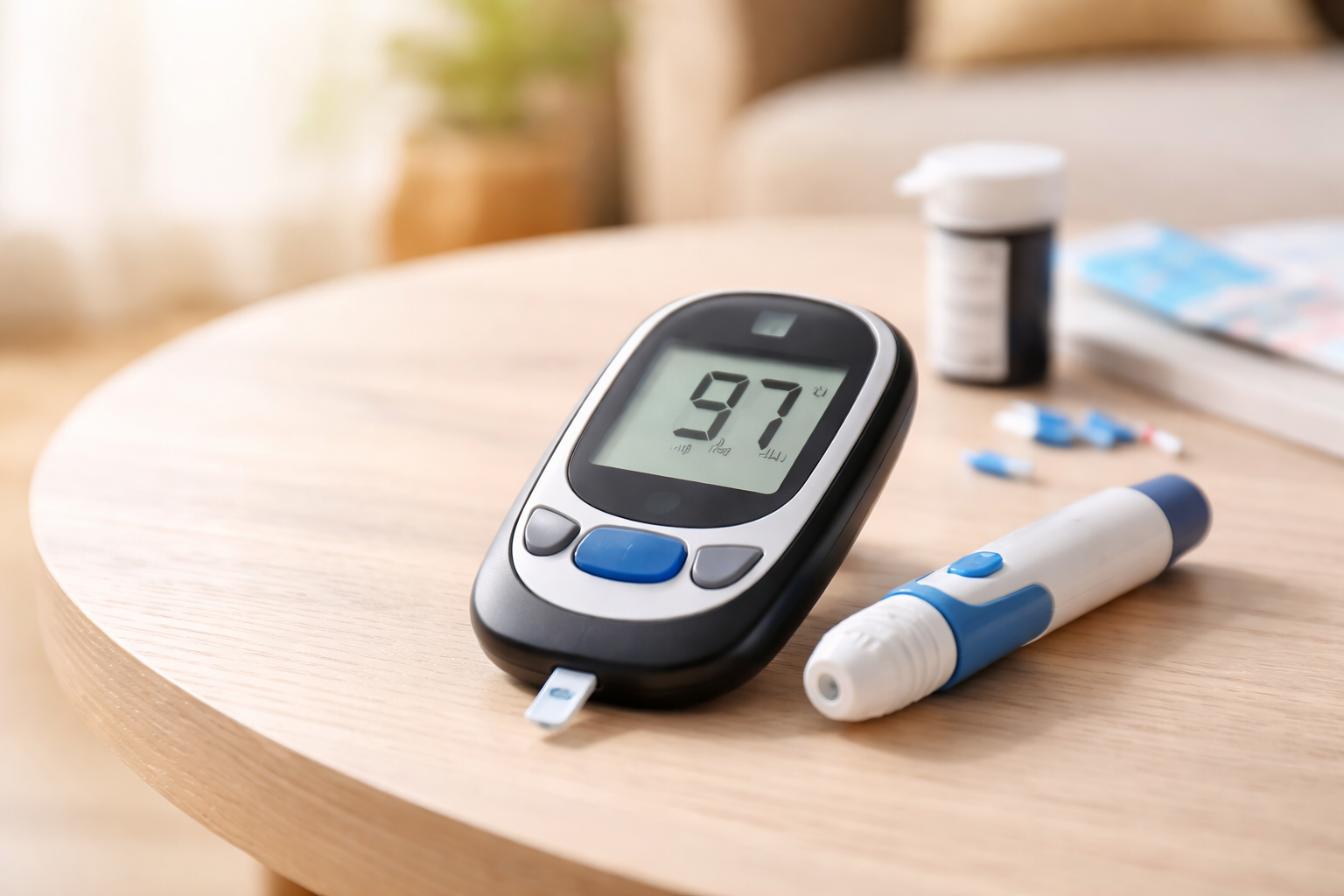
Dennis, 61, a forklift supervisor in Joliet, Illinois, has had type 2 for five years. Metformin twice a day, a meter in the kitchen drawer he checks "when Linda makes me." The Sunday after his granddaughter's birthday in June, Linda made him. Pancakes, syrup, a glass of orange juice, a second helping because the kids were laughing. An hour later the meter said 263. He'd never seen a number that started with a two. He went straight to the living room, sat down, and typed: what's the fastest way to lower blood sugar.

"I thought I'd broken something," he told us. "Like I'd done permanent damage with one plate of pancakes."
If you're holding a meter right now with a number you don't like, take a breath. Here's what actually helps in the next hour, when to stop reading and call someone, and the part Dennis didn't understand until three weeks later.
First: when a high number is an emergency
Call your doctor or go to urgent care today if your reading stays above 300, or if a high number comes with vomiting, deep fast breathing, a fruity smell on your breath, confusion, or extreme thirst and weakness. If you take insulin, follow the plan your doctor gave you, not a website. And never take an extra dose of a sugar-lowering pill to "fix" one reading. Pushing a number down too fast can swing you into a low, which is its own emergency.
Dennis felt fine. Thirsty, a little foggy, no other symptoms. So here's what he did, and what we'd tell anyone in his chair.
What really lowers blood sugar fast
- Walk, and walk soon. Your muscles pull sugar out of the blood when they work, no insulin required. This week the Korean Diabetes Association put out a statement on exactly this: two minutes of light walking after a meal can help blunt a spike, and in one study, walking within ten minutes of finishing a meal lowered the peak. Can't get outside? March in place, do heel raises, walk the hallway.
- Drink water. High sugar pulls water out of you. Water won't erase a spike, but it helps your body clear the extra and keeps you from feeling worse.
- Take your medicine as prescribed, on time. Not extra.
- Next meal, change the order. Eat the vegetables and protein first and the bread or potatoes last. The same food, eaten in that order, tends to spike less.
Dennis walked the block three times, slowly, drank two big glasses of water, and checked again at 3 p.m. 171. By supper, 148. "I felt like I'd won something," he said.
He had. But not the thing he thought.
Why the fast fixes didn't move the number that counts
Three weeks later, in July, Dennis had his regular checkup, and his A1c came back at 7.9, up from 7.4 in the spring. He'd done the walks. He'd checked more often. He'd skipped the pancakes. And the number his doctor actually watches had still gone up.
Here's what nobody had explained. Every trick above lowers a reading. A walk burns off a spike. Water helps clear a little. But your A1c is a three-month average of everything, including all the hours you're not looking: the 3 a.m. rise, the afternoon slump, the slow creep that happens even on the "good" days. Fast fixes are like bailing water out of a boat. Useful. Necessary. But if the boat keeps filling, the question is where the water's coming in.
For a lot of people, part of the answer is a signal. After you eat, your gut sends a messenger called GLP-1 that tells your body to release insulin on time and tells your brain you're full. You know the name from the weekly-shot commercials, but your body has made its own version all your life. When that natural signal fades, which researchers have linked to type 2, sugar lingers after meals, cravings get louder, and the number climbs even when you do everything you're told.
A walk fixes the spike, not the leakHear a physician explain where the number keeps coming from →The video his daughter sent
His daughter Kristen, a nurse's aide, heard about the 7.9 on the phone that weekend and sent him a link that night with a short message: "Dad, watch this before you start counting pancakes for the rest of your life."
It was a presentation from a physician who taught the usual advice for decades, watch the sugar, take the pills, walk after meals, until someone close to him kept climbing anyway. He went looking for the reason, and he describes a factor that the usual checklist doesn't check for, one that gets in the way of how the body uses its own insulin, along with a short morning routine built around a particular oil. He is very specific about the kind and about the timing, and he explains why it isn't the honey-and-cinnamon trick from the internet. We won't try to retell it. It loses something every time.
Dennis watched it on the forklift break-room computer with the volume low. "Five years and nobody told me why the walking stops working. They just told me to walk more."
Before you bail out the next spikeWatch the explanation Kristen sent her dad →Before you change anything
Keep your medicine, your appointments and your walks. They matter. If you take insulin or a pill that can cause lows, talk to your doctor before adding anything that lowers blood sugar, and check more often for the first few weeks.
What's next to Dennis's meter now
At the end of the presentation, the physician talks about a supplement made to support the body's own blood sugar balance, including the long stretches between meals that the fast fixes never reached. The bottle next to Dennis's meter is Glyco Barrier.
He's not a man who buys things off the internet, and he said so. He read every line of the label at the kitchen table, then called his pharmacist and read it to him. The pharmacist said nothing on it looked like a problem with his metformin, and to keep checking his numbers and mention it at his next visit.

What he underlined on the label
- Chromium picolinate. A mineral studied for how well the body responds to its own insulin. "The part the walks don't reach," he wrote.
- Gymnema sylvestre leaf. A traditional herb for healthy glucose metabolism, long linked to quieting the pull toward sweets. He drew a little pancake next to it.
- Green tea leaf. Antioxidants and gentle metabolic support.
- Coleus forskohlii root. Supports how the body uses stored fuel.
- Maca root. Traditionally used for steadier energy, which mattered on a twelve-hour shift.
His three months, a stretch at a time
- Weeks 1 and 2. Same walks, same metformin, drops morning and evening. Nothing he'd swear to. The after-supper pull toward the cookie tin was a little quieter.
- Weeks 3 to 6. His morning readings came down from the 150s into the 130s on most days, without changing anything else.
- Month 2. The Sunday breakfast test, his idea: same pancakes, smaller stack, walk after. 182 at the hour mark instead of 263.
- Month 3. His recheck in early October came back 7.1. His doctor said, "Whatever you're doing, keep doing it," and Dennis said, "All of it."
Was it the drops, the walks, the smaller stack, or all of it together? Dennis gives the credit to all of it, and that's the right answer. Anything aimed at how the body handles sugar between meals takes weeks before an A1c can show it, because the A1c itself is built from three months of blood. Individual results vary, and some people will still need more help from their doctor. That isn't failure.
It may suit you if you have type 2 or prediabetes, you know how to bring a spike down but the number keeps creeping back up, and your evenings or your cravings keep undoing your good days. Skip it or ask your doctor first if you have type 1, take insulin or another glucose-lowering medicine, or you're pregnant or nursing.
The order page shows a 60-day satisfaction promise from the date of purchase. Dennis's reasoning: "I spent five years bailing. Sixty days to look for the leak seemed fair."
The fast fixes buy you an afternoonSee what's next to Dennis's meter →P.S. Dennis still walks after Sunday breakfast. The granddaughters come with him now and call it "Grandpa's lap." He still knows exactly how to bring a 263 down in an afternoon, and he hasn't needed to since July. If you're the one holding the meter right now, do the walk first. Then, tonight, watch what Kristen sent him.
Continue reading How to Reverse Prediabetes Naturally? Gail's Doctor Said "Come Back in Six Months" What she did with the six months most people spend waiting.Sources and further reading
Seoul Economic Daily. Two-minute walk after meals curbs blood sugar spikes (Korean Diabetes Association statement), October 20, 2026.
Buffey AJ, et al. The acute effects of interrupting prolonged sitting time in adults with standing and light-intensity walking on biomarkers of cardiometabolic health. Sports Medicine, 2022.
American Diabetes Association. Standards of Care in Diabetes, 2026.